CNC machined robotic parts are moving from a niche purchasing category into a serious sourcing priority in 2026. The reason is simple: robotics demand is rebounding, warehouse automation keeps expanding, and manufacturers in the US and EU are under pressure to automate without losing control of cost, quality, or supply risk. For buyers, this is not just about finding a shop that can machine aluminum. It is about finding a supplier that understands precision, repeatability, material behavior, inspection, and export communication. Vietnam is becoming more relevant in that conversation, especially for aluminum-based robotic components that need CNC machining, finishing, and stable batch production.
Robotics Rebounded — And Parts Demand Follows
The robotics market had a clear rebound story going into 2026. Manufacturing Dive reported in June 2026 that US robot installations grew 11% in 2025, reaching 38,000 units after two consecutive years of decline. The article cited preliminary International Federation of Robotics data and noted that 2025 was the third-strongest year on record for US robot installations, behind 2018 and 2022.
That is not just a headline for robot makers. It matters to every supplier behind the robot: CNC machine shops, aluminum extrusion manufacturers, precision component suppliers, surface treatment partners, and assembly vendors. When more robots are installed, more CNC machined robotic parts are needed — from motor mounts and joint housings to frame rails, brackets, protective covers, and end-effector plates.
The rebound was not limited to one sector. Automotive remained the main driver of US robot demand, accounting for more than a third of units installed in 2025. At the same time, food production grew 30%, while non-manufacturing areas such as warehousing and logistics grew 41%, according to the same Manufacturing Dive report.
That last number is worth pausing on. Warehousing and logistics are becoming one of the most interesting areas for custom robotic components. These systems often need lightweight frames, sensor brackets, actuator housings, gripper plates, guide rails, and protective structures. Some parts are simple. Some are not. But all of them must survive repeated motion, vibration, and long operating hours.
Here’s the thing: a robot can look sleek in a demo video, but in a real warehouse, it gets bumped, loaded, cleaned, charged, and pushed through thousands of cycles. The metal parts inside that system need to be steady, not pretty for one trade show.
Why the 2026 Robotics Boom Changes Sourcing
Robotics growth is changing how buyers think about sourcing. In the past, many teams bought robot parts in small batches for prototypes or limited automation cells. In 2026, more buyers are thinking in programs: pilot run, validation, ramp-up, mass production, spare parts, and cost-down version.
That changes the supplier requirement.
A prototype supplier only needs to make one part look good. A production supplier must make every batch consistent. For precision CNC parts for robotics, that means stable material, controlled machining, clear inspection, surface finish control, packaging, and documentation.
Manufacturing Dive also noted that robots are becoming easier for manufacturers to access through robotics-as-a-service models. Instead of treating robots only as large capital investments, some companies now lease hardware or software as an operating expense. This shift can bring more mid-sized manufacturers into automation.
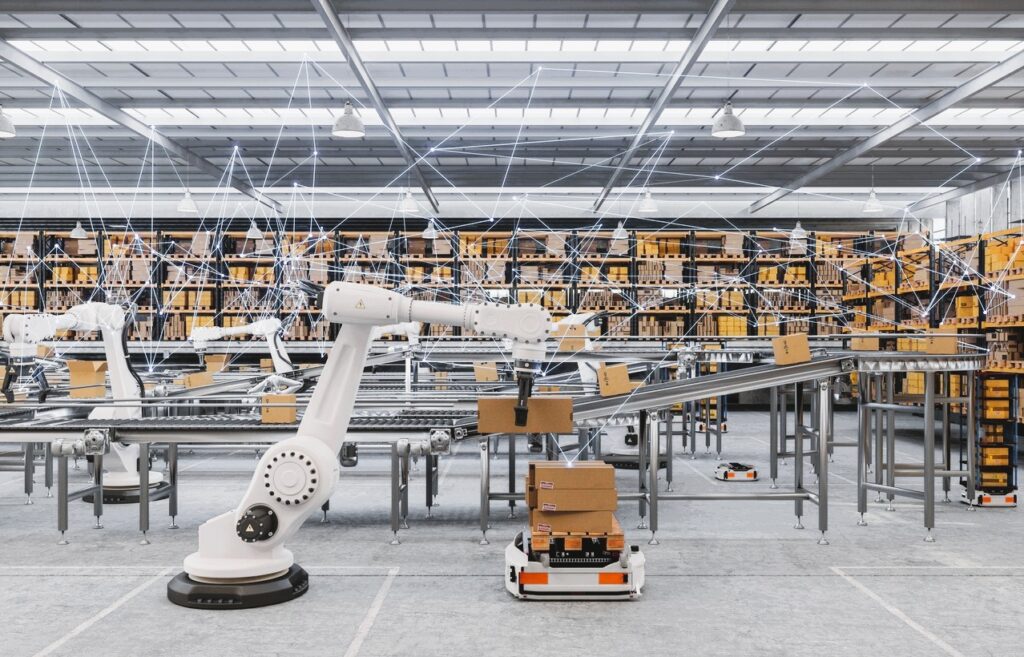
And when more mid-sized manufacturers adopt robots, the component market becomes broader. Not every buyer needs aerospace-level parts. Many need practical, reliable, reasonably priced CNC machined components that can be assembled without drama.
For US and EU buyers, that is where Vietnam enters the conversation. Vietnam is not a magic shortcut, and not every supplier will fit robotics projects. But for aluminum components, CNC machining, extrusion-based structures, stamped parts, and assembly-ready industrial components, Vietnam can be a practical sourcing base when the supplier has the right process discipline.
KIMSEN Industrial Corporation, based in Bac Ninh, Vietnam, presents itself as a full-service supplier of aluminum extrusion, stamped, CNC machined parts, components, and assemblies for global markets. For robotic applications, the best fit is not construction aluminum, window aluminum, simple profiles, die-cast aluminum, or sheet aluminum. The better fit is industrial aluminum parts that need CNC machining, controlled finishing, and repeatable quality.
What Counts as CNC Machined Robotic Parts?
CNC machined robotic parts are custom components produced by computer-controlled machining for use in robots, automation systems, or motion equipment. Buyers usually send 2D drawings, 3D models, material requirements, tolerance notes, surface finish requirements, and expected volume.
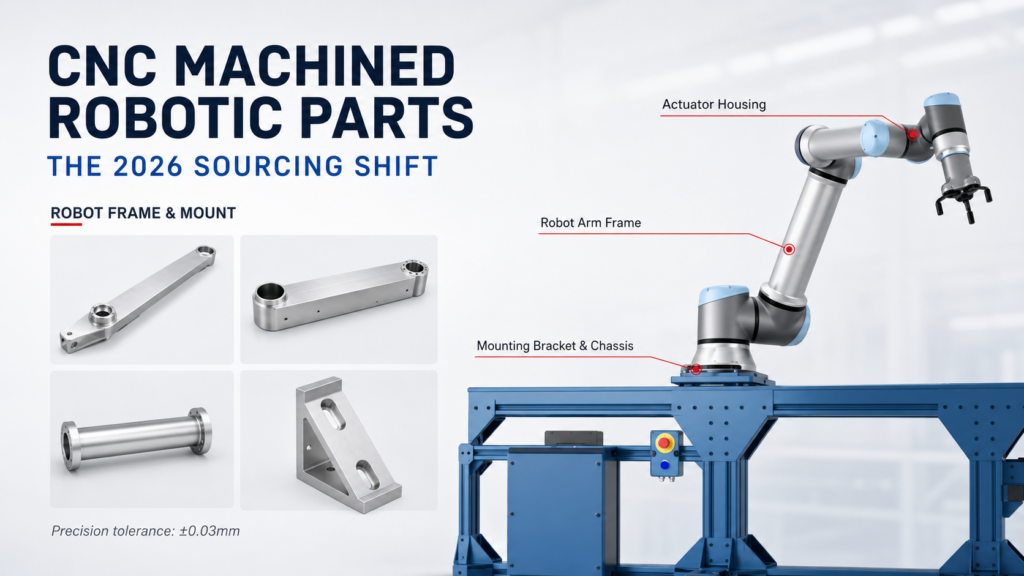
Common parts include:
- Robotic arm links
- Servo motor mounts
- Actuator housings
- Joint housings
- Bearing seats
- Sensor brackets
- Camera brackets
- End-effector plates
- Aluminum robot frames
- Gripper bases
- Cable routing covers
- Heat sink brackets
- Protective enclosures
- Mounting rails for warehouse automation
These parts can be found in robotic arms, AMRs, AGVs, sorting machines, automated storage systems, inspection equipment, packaging machines, and custom production lines.
Why these parts need more than basic machining
A robotic component often controls position. That makes it different from a basic cover or decorative part. If a motor mount is off by a small amount, the motor shaft may not align well. If a bearing bore is not round enough, movement can become rough. If a sensor bracket bends during shipping, the robot may “see” the wrong location.
This is why buyers search for precision CNC parts for robotics, not just “cheap CNC parts.” The part must fit the assembly, hold alignment, and repeat across batches.
Honestly, this is where many sourcing projects go wrong. The quote looks fine. The sample looks fine. Then the second batch arrives, and small differences start causing assembly noise. Robotics punishes inconsistency.
Robotic Arm CNC Machining: Where Tolerance Matters
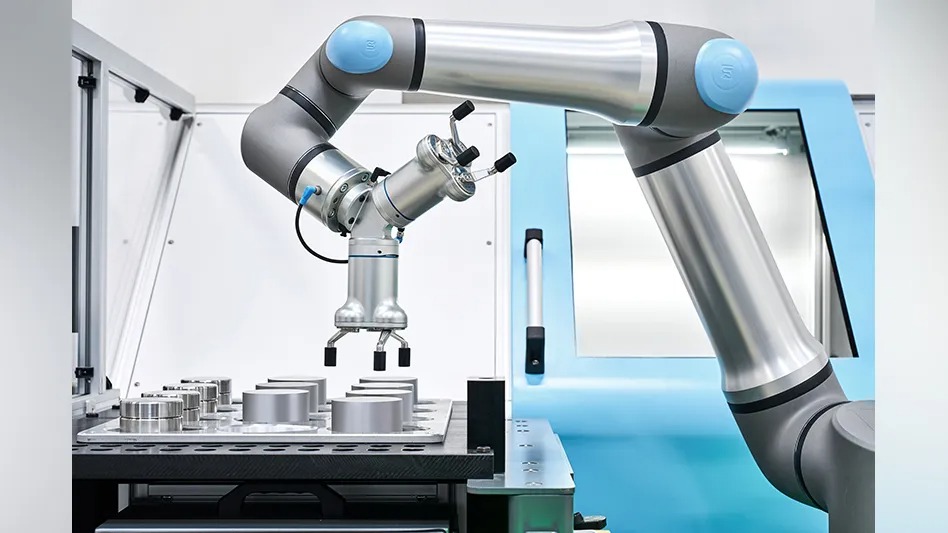
Robotic arm CNC machining is one of the clearest examples of why precision matters. A robot arm is a chain of parts. If one link is weak, twisted, or inaccurate, the movement of the whole arm can suffer.
Arm links and lightweight structures
Robotic arm links need stiffness without unnecessary weight. CNC machining can remove material through pockets, ribs, and cutouts while keeping strength in the right areas. The goal is not to make the part as light as possible. The goal is to make it light enough while still stable.
That small difference matters. Too much weight increases load on motors. Too little structure may cause flexing. A good supplier should understand both machining and the function of the part.
Joint housings and bearing seats
Joint housings often hold bearings, shafts, or drive elements. These parts may need controlled bores, flat datum faces, perpendicular surfaces, and clean threads. A joint housing is not just a box. It is a movement control part.
For these components, buyers should clearly mark critical dimensions. Bearing bores, shaft openings, motor faces, and datum surfaces need more attention than cosmetic edges.
End-effector plates and tool mounts
The end-effector is where the robot meets the job. It may hold a gripper, suction cup, scanner, welding head, camera, or custom tool. End-effector plates often change during development, so CNC machining is useful for fast design updates.
For buyers building new automation equipment, this flexibility is valuable. A design can move from prototype to pilot run without waiting for expensive tooling. Later, when volume increases, the buyer and supplier can discuss whether the process should change.
Why Aluminum Fits Many Custom Robotic Components
Aluminum is widely used for custom robotic components because it offers a good balance of weight, machinability, corrosion resistance, and surface finish. In robotics, weight is not just a material issue. It affects speed, motor load, battery life, vibration, and even safety.
Aluminum 6061 for machined robotic parts
6061 is often used for CNC machined brackets, housings, plates, and structural parts. It offers good strength, good machinability, and broad availability. For many robot frames, supports, covers, and mounting parts, 6061 is a practical choice.
Aluminum 6063 for extrusion plus CNC machining
6063 is common for extruded aluminum profiles. For long robotic rails, frames, covers, and support structures, extrusion plus CNC machining can be a smart production route. The extrusion creates the repeated shape. CNC machining adds the holes, slots, tapped features, and precise mounting points.
This approach can reduce material waste compared with machining a long part from solid block. It can also improve production stability when the design repeats across many units.
Aluminum 7075 for high-strength robotic structures
7075 may be used when higher strength is needed, such as in demanding robotic arm structures or compact parts carrying higher load. It is stronger than common 6000-series alloys, but it can cost more and may need more careful finishing decisions.
The best material is not always the strongest one. It is the one that fits the real job. A sensor bracket does not need the same alloy as a high-load arm link. A housing does not need the same treatment as a sliding wear part. A good supplier should help buyers avoid paying for performance they do not need.
Warehouse Automation Is Creating New Part Demand
One of the most important points from the Manufacturing Dive report is the growth of warehousing and logistics robotics. The article noted that material handling robots accounted for 60% of all North American robotics orders in the first quarter of 2026.
That is a big clue for component suppliers.
Warehouse automation systems often use many aluminum and CNC machined parts, including:
- AMR frames and covers
- Sensor mounting brackets
- Camera supports
- Motor and wheel housings
- Conveyor connection plates
- Lifting mechanism brackets
- Battery cabinet parts
- Control box mounting rails
- Gripper and picking module parts
- Protective guards and cable routing covers
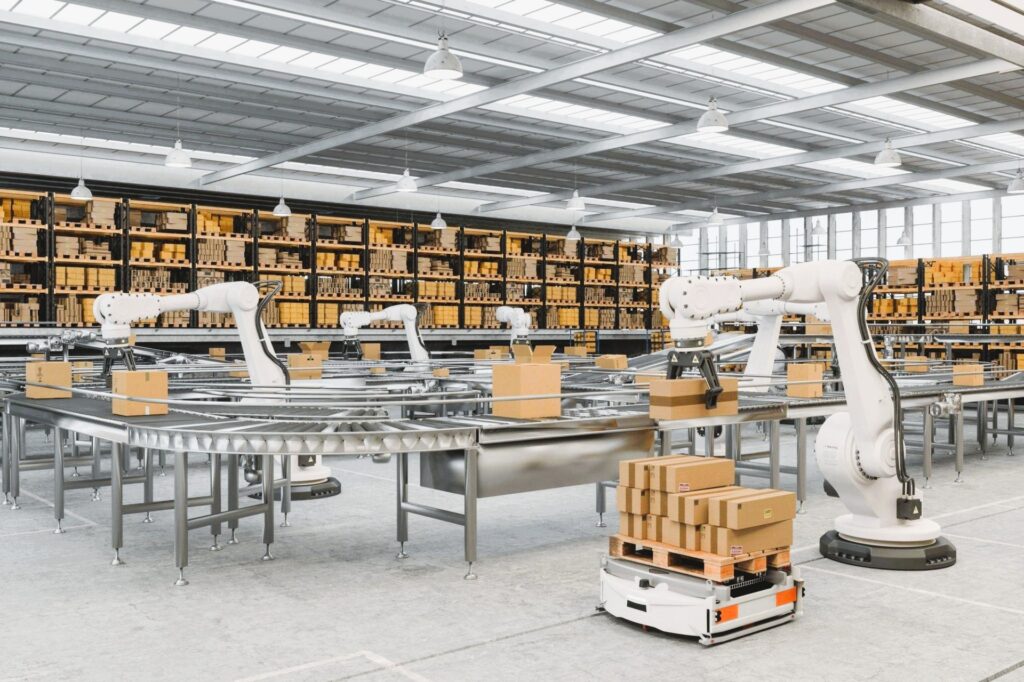
These parts may not always be as glamorous as humanoid robot hands or advanced robotic joints. But they are real, repeated, and commercially important.
Manufacturing Dive also pointed out that humanoid robots had very few real-world applications in 2025 and 2026, with many deployments still tied to research, development, or entertainment. That gives buyers a useful reminder: the strongest near-term demand may not come from flashy robots. It may come from practical automation — moving boxes, sorting goods, handling food, supporting production, and reducing labor strain.
For aluminum product buyers, that is good news. Practical automation needs practical parts. Brackets, housings, rails, mounts, and frames may not make headlines, but they make robots work.
How to Prepare a Better RFQ for CNC Machined Robotic Parts
A strong RFQ helps the supplier quote faster and more accurately. It also helps buyers compare suppliers fairly.
For CNC machined robotic parts, include:
- 2D drawings with tolerances
- 3D CAD files
- Material grade
- Surface finish requirement
- Critical dimensions
- Expected annual volume
- Prototype quantity
- Target lead time
- Application description
- Inspection requirements
- Packing requirements
- Any export or compliance notes
Mark the critical features
Do not make the supplier guess. If a bore controls bearing fit, mark it. If a face controls motor alignment, mark it. If a thread is used often during service, note it.
Explain the robot application
A part used in a warehouse AMR may have different priorities from a part used in a high-speed robotic arm. Load, vibration, environment, duty cycle, and assembly method all matter.
Ask for DFM feedback
Design for manufacturing is not just a cost-saving trick. It can improve stability. A supplier may suggest a larger corner radius, a better clamping surface, a more practical tolerance, or a different machining sequence.
A good RFQ says: “Here is what we need the part to do.” Not just: “Here is the drawing.”
Conclusion
The robotics rebound in 2025 and the stronger outlook for 2026 are creating new demand for CNC machined robotic parts. Automotive remains important, but warehousing, logistics, food production, material handling, and practical automation are opening a broader market for aluminum frames, brackets, housings, rails, mounts, and custom robotic components.
For US and EU buyers, this is the right time to review the sourcing strategy. The question is not only who can machine the part. The better question is who can control quality, support design changes, manage material and finishing, protect parts during shipping, and communicate clearly across time zones.
Vietnam can be a practical sourcing base for aluminum-based robotic parts when the supplier has the right mix of CNC machining, extrusion knowledge, inspection discipline, and export experience. KIMSEN Industrial Corporation can support suitable projects that need aluminum extrusion, stamped, CNC machined parts, components, and assemblies from Vietnam.
Robots may be getting smarter, but the parts still have to fit. That’s where good sourcing begins.
>> Read more: 3PL Robotics: How Aluminum Components Support the Next Wave of Warehouse Automation