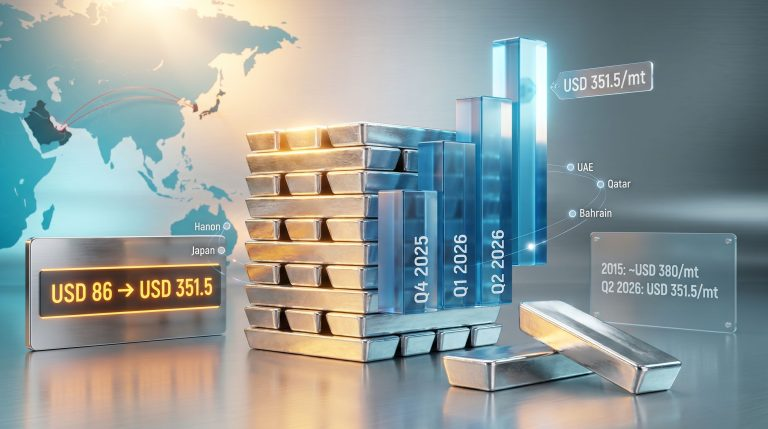
The Japan Q3 aluminum premium has settled at US$395/mt CIF Japan, above the London Metal Exchange cash price. Compared with the Q2 2026 level of US$350–353/mt, this means an increase of around 11.9–12.9%.
That is lower than the earlier market offers of US$440–480/mt, including one widely watched offer around US$460/mt. Still, it remains a high premium by recent historical standards. For buyers of aluminum heatsinks, extruded aluminum parts, CNC machined components, inverter housings, and thermal solutions, this update matters.
Not because every quote will suddenly jump overnight. Real pricing is never that simple. But because the settlement tells us something important: physical aluminum supply is still tight, buyers are still cautious, and the market has not fully returned to normal.
What Is the MJP Premium?
MJP stands for Main Japanese Ports. In simple terms, it is the premium paid by Japanese buyers for imported primary aluminum over the LME cash price. Because Japan is a large aluminum importer and quarterly negotiations are closely watched, the MJP premium has become a major pricing reference for Asia.
For many global buyers, especially companies sourcing aluminum extrusion, machined aluminum parts, heatsinks, automotive components, or industrial assemblies, MJP is not a distant number. It often influences how billet suppliers, extrusion plants, traders, and downstream manufacturers think about raw material cost.
Think of LME as the “base metal price” and MJP as the “real-world delivery pressure” added on top. When shipping is easy, supply is comfortable, and buyers have options, the premium can stay calm. But when metal is hard to move or buyers fear shortages, the premium can climb quickly.
What Changed: From $450–460 Forecast to $395 Settlement
Earlier in the Q3 negotiation cycle, market sources reported offers in the US$440–480/mt range. That created concern that the Japan aluminum premium could move close to US$450–460/mt, which would have represented a sharp jump from Q2.
The final settlement came in lower, at US$395/mt CIF Japan.
So the article’s main number should now be updated:
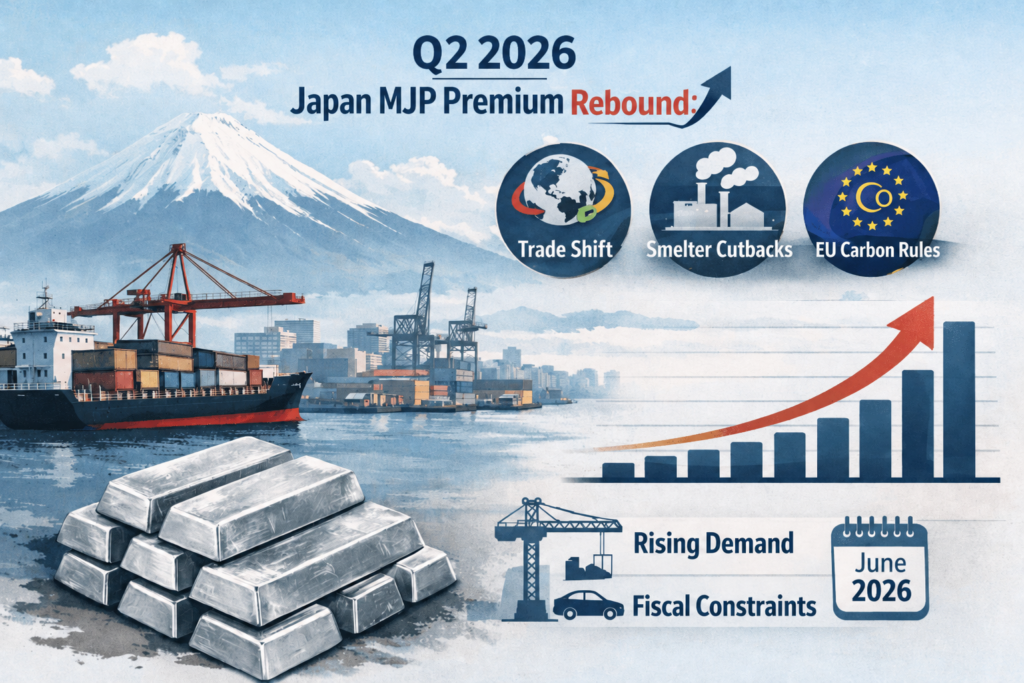
- Q2 2026 Japan premium: US$350–353/mt
- Q3 2026 Japan premium: US$395/mt
- Increase from US$353/mt: about 11.9%
- Increase from US$350/mt: about 12.9%
That changes the tone of the story. The market did not accept the most aggressive offer levels. Buyers pushed back. Some supply concerns eased. Premiums in Europe and the US also softened during the negotiation period, which reduced buyers’ willingness to accept much higher numbers.
But here’s the thing: US$395/mt is still high. It is not a quiet, comfortable number.
Why Is the MJP Premium Forecast Rising?
The main reason is physical supply risk. Not theory. Not market noise. Real concerns around available aluminum units.
Middle East Supply Risk Is Still the Big Driver
The Middle East plays an important role in global primary aluminum supply. When geopolitical tension affects cargo movement, insurance, freight, or smelter operations, the premium market reacts fast.
For Japan and other Asian buyers, Middle East-origin aluminum matters because it is part of the regular seaborne supply chain. If cargoes are delayed, rerouted, or priced with higher risk, buyers have to compete for alternative units. That competition pushes premiums higher.
The Market Is Pricing Security, Not Just Metal
A rising MJP premium is not only about aluminum itself. It is also about certainty.
Buyers are paying for:
- cargo availability;
- reliable delivery timing;
- non-disrupted supply routes;
- acceptable origin and brand;
- lower risk of last-minute replacement buying.
That is why premiums can rise even when some buyers say demand is not booming. The issue is not always “everyone needs more aluminum.” Sometimes the issue is “everyone needs safe aluminum at the same time.”
Are Global Aluminum Stocks and Billet Stocks Falling?
Available stock is one of the most important signals in the current market. When inventories fall, buyers lose bargaining power. Sellers know replacement material may cost more tomorrow.
Recent market updates have pointed to lower inventories in parts of the aluminum chain, including billet and secondary alloy ingot flows. In China, aluminum billet inventory has shown weekly declines in major consumption areas. Secondary aluminum alloy ingot inventory has also moved lower, with supply affected by production controls and invoice-related constraints.
Now, let’s be careful here. Primary aluminum ingot, extrusion billet, and secondary alloy ingot are not the same product. They do not move in a perfect one-to-one relationship. But they are connected through sentiment, substitution, and purchasing behavior. When buyers see tightening in several parts of the aluminum chain, they become more cautious. They restock earlier. They negotiate faster. Some even accept higher prices to avoid being short later.
That behavior can feed the premium cycle.
Demand Is Not Exploding Everywhere, But Restocking Is Real
Some traditional sectors, such as construction, may not be running at full speed in every market. But demand from energy transition, grid equipment, automotive lightweighting, EV systems, data centers, electronics cooling, and industrial automation remains important.
For aluminum extrusion buyers, this matters because many growth sectors use aluminum not as a decorative material, but as a functional one. For example:
- EV battery pack structures need lightweight, strong aluminum profiles.
- Inverter housings and heatsinks need thermal performance.
- Solar mounting systems need corrosion resistance and stable supply.
- Data center and power electronics projects need thermal parts with reliable tolerances.
- Machinery and automation systems need custom extrusions and CNC-machined parts.
So even if demand is not hot everywhere, it is firm enough in the right segments to support restocking. And when supply fear meets steady demand, premiums can rise.
What Does $395/mt Mean for Heatsink Buyers?
For heatsink buyers, the Japan Q3 aluminum premium is not the only pricing factor. A heatsink quote may include alloy cost, extrusion cost, CNC machining, surface treatment, flatness requirements, packing, logistics, and testing.
Still, the premium can affect the raw material side of the equation.
If a heatsink supplier uses extrusion billet linked to Asian aluminum premium trends, a higher MJP can influence purchasing behavior and quote validity. Suppliers may avoid holding prices for too long. Some may ask to revise quotations if LME or premiums move outside an agreed range.
Buyers may notice:
- shorter quotation validity;
- more frequent raw material updates;
- less flexibility on urgent orders;
- stronger requests for forecast volume;
- higher attention to alloy and billet planning.
This does not mean every heatsink price will rise by 12%. That would be too simplistic. But it does mean the cost base is under pressure, especially for aluminum-intensive designs.
What About Aluminum Extrusion and CNC Machined Parts?
Aluminum extrusion buyers may feel the impact more directly. Extruded profiles depend heavily on billet availability and conversion cost. When billet cost moves, extrusion quotes usually react.
For CNC machined aluminum parts, the effect depends on material input. A small precision part with long machining time may be less sensitive to raw material movement. A large machined aluminum base, cold plate body, or power electronics housing may be more exposed.
This is why buyers should not look only at the premium. They should look at the cost structure of their own part.
A simple question helps: How much of the total cost is aluminum material, and how much is processing?
If material is a large share, premium movement matters more. If machining, finishing, and inspection dominate the cost, the premium matters, but it is not the whole story.
Why US and EU Buyers Should Watch Asia Premiums
Some US and EU buyers may ask: “If we don’t buy primary aluminum in Japan, why should we care about MJP?”
Fair question.
The answer is that aluminum is global, but physical supply is regional. When Japan pays more to attract metal, Asian suppliers may face higher billet costs. When Asian billet costs move, aluminum extrusion pricing in Vietnam, China, Thailand, Malaysia, and other manufacturing hubs can also move. Even if the final part is shipped to Germany, France, the Netherlands, or the United States, the upstream metal pressure may already be inside the quote.
For OEMs and Tier suppliers sourcing from Vietnam, the MJP premium is one useful early signal. It does not tell the whole story, but it helps procurement teams read the direction of the market before the next supplier price update lands in their inbox.

How Buyers Can Respond Without Overreacting
No one can control the MJP premium. But buyers can control how they prepare.
A good starting point is to review open RFQs and repeat orders. If a project is likely to move in Q3 or Q4, it may be better to confirm specifications, alloy grade, annual volume, and delivery schedule earlier. Waiting for the “perfect” price can backfire when the market is tight.
Buyers should also ask suppliers direct questions:
- What billet source is being used?
- How long is the quote valid?
- Is the price linked to LME, MJP, or another premium?
- Can the supplier support partial shipments?
- Is there a safety stock plan for repeat orders?
- Which cost elements may change before mass production?
For custom aluminum parts, buyers should also reduce avoidable changes. A small drawing revision may seem harmless, but if it delays tooling, sampling, or billet reservation by several weeks, the commercial impact can be much bigger than expected.
Vietnam’s Role in a Volatile Aluminum Market
Vietnam continues to attract attention from US and EU buyers looking for aluminum extrusion, CNC machining, mechanical assembly, and thermal solution manufacturing. The reason is not only cost. It is also the ability to build a more balanced supply chain outside traditional sourcing routes.
For companies buying aluminum parts, Vietnam can offer a practical mix of manufacturing capability, export experience, and regional access to Asian material flows. Still, buyers should not assume that Vietnam is isolated from global aluminum price pressure. It is not. Billet and premium movements still matter.
That is why working with a manufacturer that communicates clearly is so important. When aluminum prices move fast, silence is expensive. Buyers need updates, cost breakdowns, and early warnings.
KIMSEN Industrial Corporation, based in Vietnam, supports aluminum extruded products and mechanical manufacturing for industrial applications such as automotive, thermal solutions, machinery, electronics, and energy-related components. For buyers managing volatile aluminum costs, the value is not just making the part. It is helping make the sourcing process easier to control.
Final Thoughts
The Japan Q3 aluminum premium has now settled at US$395/mt CIF Japan, not the earlier feared US$450–460/mt range. That is a relief in one sense. Buyers resisted higher levels, and some supply concerns eased during negotiations.
But US$395/mt is still a strong number. It is up 11.9–12.9% from Q2 and remains high by historical comparison.
For buyers of heatsinks, aluminum extrusion, CNC machined parts, and industrial aluminum components, the message is clear: price risk has not disappeared. It has simply become more measurable.
The smart move now is to plan early, ask clear questions, review material assumptions, and work with suppliers that can explain both the technical and commercial side of aluminum sourcing.
Because when the market is tight, good communication is not a small thing. It is part of the supply chain.
FAQ
What is the Japan Q3 aluminum premium for 2026?
The Japan Q3 aluminum premium settled at US$395/mt CIF Japan over the LME cash price.
How much did the Q3 premium increase from Q2?
Compared with Q2 2026 levels of US$350–353/mt, the Q3 premium increased by about 11.9–12.9%.
Why did the premium settle below earlier $450–460/mt expectations?
Buyers resisted levels above US$400/mt, while concerns over Middle East supply disruptions eased somewhat. Premiums in Europe and the US also softened during the negotiation period.
Does this affect heatsink prices?
It can affect the raw material side of heatsink pricing, especially for aluminum-intensive extruded heatsinks or machined aluminum thermal components. The final impact depends on alloy, size, machining time, surface treatment, and supplier pricing terms.
Should buyers wait for Q4 prices to ease?
Some market participants expect premiums may soften if Middle East supply normalizes. However, port stocks remain low and supply recovery may take time. Buyers should plan early rather than rely only on a possible Q4 decline.
Japanese Q3 aluminum premium settles higher at $395/mt CIF Japan | S&P Global