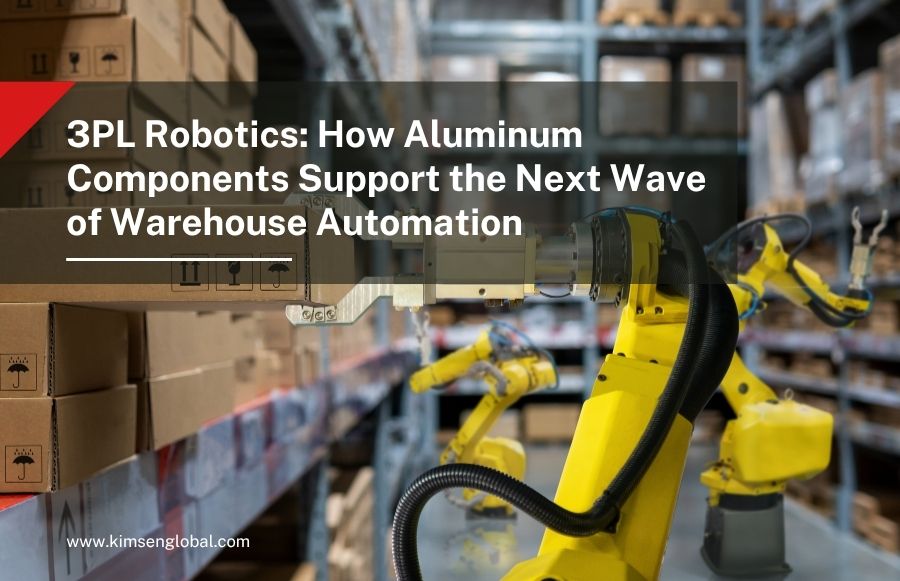
The rise of 3PL Robotics is changing how goods move inside warehouses, fulfillment centers, and logistics hubs. For buyers in the US and Europe, this shift is not only about smarter robots or faster delivery. It is also about the mechanical parts behind the system: lightweight frames, machined brackets, heatsinks, sensor housings, guide rails, enclosures, and structural assemblies that keep warehouse automation running day after day. Aluminum plays a quiet but important role here. It helps robots move faster, reduces system weight, supports thermal control, and gives automation builders the flexibility to design equipment that can handle real warehouse pressure.
And that pressure is growing.
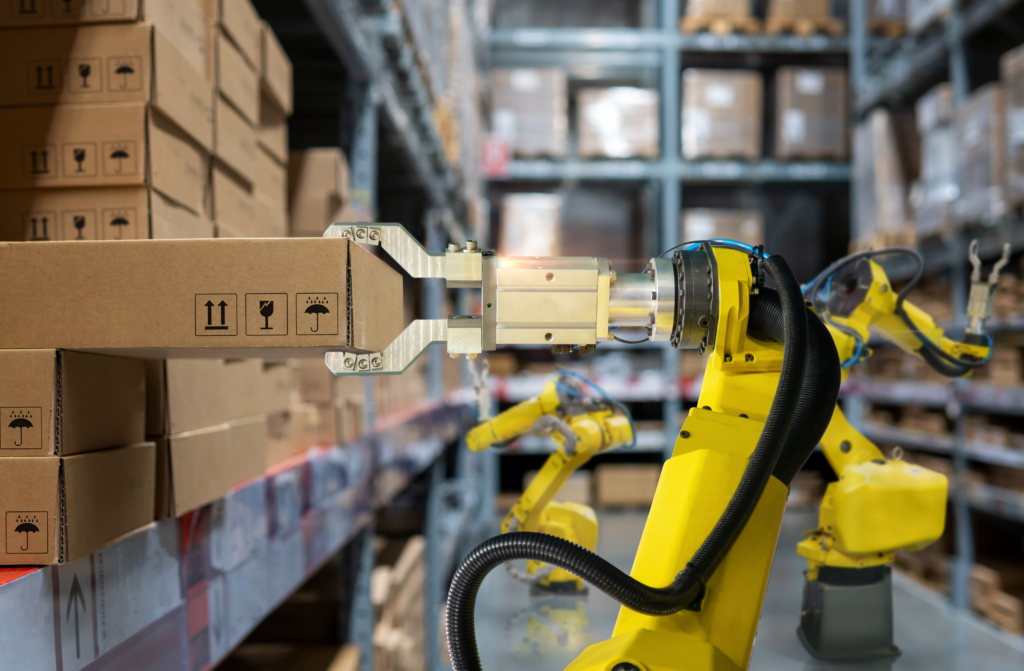
E-commerce is still demanding faster order cycles. Labor remains expensive in many developed markets. 3PL operators are expected to handle more SKUs, more returns, more peak-season spikes, and more customized delivery requirements. So, naturally, Machinery for Warehouse automation is becoming less of a “nice upgrade” and more of a practical answer to daily operating headaches.
Here’s the thing: when people talk about warehouse robots, they often talk about AI, sensors, software, and fleet management. Fair enough. Those are exciting. But robots still live in the physical world. They carry loads, brake, turn, vibrate, heat up, collide lightly with bumpers, and work long shifts. That’s where aluminum components come in.
Why 3PL Robotics Is Becoming a Serious Growth Area
Third-party logistics providers, or 3PLs, work under a tough promise: store, pick, pack, move, and ship goods for other companies with speed and accuracy. A retailer may sell the product, but the 3PL often handles the hard warehouse work behind the curtain.
That model has changed a lot. Warehouses are no longer simple storage boxes. They are becoming active, data-connected systems where robots, conveyors, sorters, scanners, lifts, and software all talk to each other.
Modern 3PL Robotics can include:
- Autonomous Mobile Robots, often called AMRs
- Automated Guided Vehicles, or AGVs
- Robotic picking arms
- Conveyor and sortation systems
- Automated storage and retrieval systems
- Palletizing and depalletizing robots
- Vision inspection stations
- Smart charging stations
- Control cabinets and sensor networks
In a busy warehouse, these systems act a bit like an airport baggage system mixed with a city traffic grid. Every item needs to move to the right place, at the right time, without creating a jam. Small delays add up quickly. Small mechanical failures can stop a whole line.
That’s why the parts inside Machinery for Warehouse automation must be light, stable, repeatable, and easy to assemble. Aluminum fits this need very well.
What Amazon’s Proteus Robot Tells Us About the Market
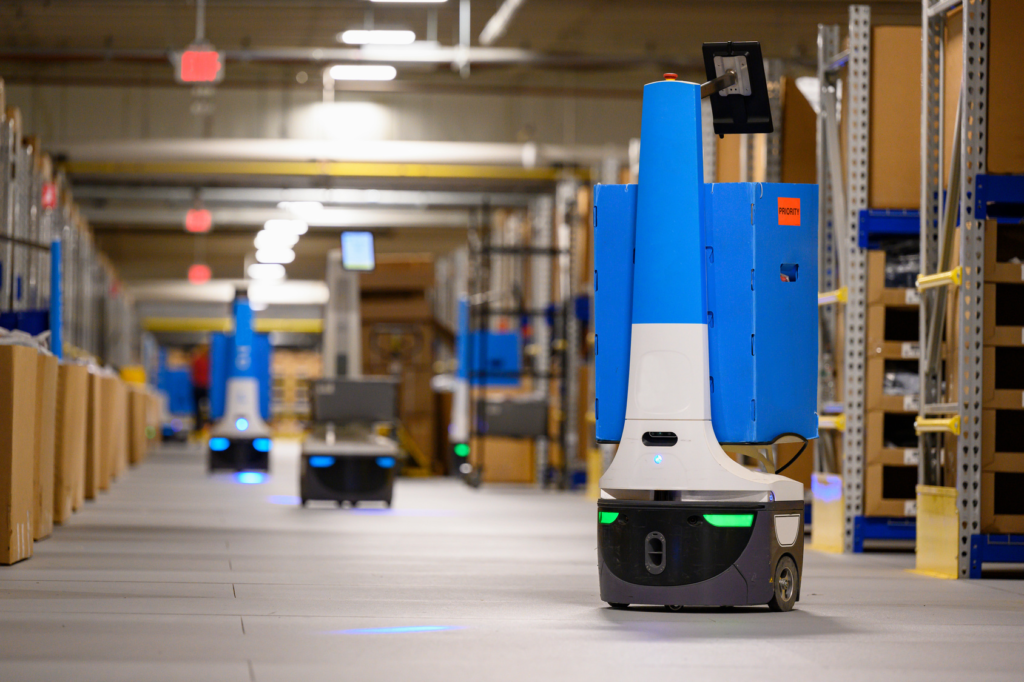
Amazon’s next-generation Proteus robot is a useful signal for the whole industry. The robot is designed to move materials inside fulfillment centers, and the newest version uses AI and natural-language controls so workers can guide tasks more easily.
That detail matters.
It suggests warehouse automation is moving away from fixed, isolated machines and toward more flexible human-robot collaboration. Robots are expected to understand instructions, plan routes, avoid people, and keep material flow smooth. For 3PL operators, this kind of development points to one thing: automation systems will become more common, more mobile, and more deeply integrated into daily warehouse work.
But smarter robots also need better bodies.
A mobile robot is not just software on wheels. It needs a stable chassis, lightweight covers, battery housing, motor mounts, electronic enclosures, cooling parts, sensor brackets, and impact-resistant structures. Many of these parts can be made from aluminum extrusion, CNC machined aluminum, stamped aluminum, or welded aluminum assemblies.
In simple terms, AI may guide the robot, but aluminum helps carry the robot.
Where Aluminum Components Are Used in 3PL Robotics
Aluminum appears across warehouse automation systems in many forms. Some parts are visible; others sit inside the machine and quietly do their job. Either way, they matter.
1. AMR and AGV Frames
AMRs and AGVs need strong but lightweight frames. A lighter frame can reduce energy demand, support longer battery life, and allow smoother acceleration. Aluminum extrusion is often used because it gives designers a good balance of strength, weight, and design freedom.
For example, extruded aluminum profiles can be used for:
- Main chassis structures
- Battery tray frames
- Modular side rails
- Sensor mounting bars
- Protective covers
- Internal support beams
The benefit is not only weight reduction. Aluminum profiles can also be designed with slots, grooves, screw bosses, and channels. This makes assembly faster and cleaner. For 3PL Robotics builders, that can help reduce production complexity.
2. Conveyor and Sortation Equipment
In Machinery for Warehouse automation, aluminum conveyor parts can support:
- Belt conveyor frames
- Roller conveyor side profiles
- Sorting gate structures
- Scanner brackets
- Light curtain holders
- Motor covers
- Adjustable guide rails
A warehouse conveyor line is like a long sentence. If one word is out of place, the meaning breaks. If one bracket bends, one rail shifts, or one roller sits off-center, cartons can jam. Precision matters.
3. Robot Arm and End-Effector Parts
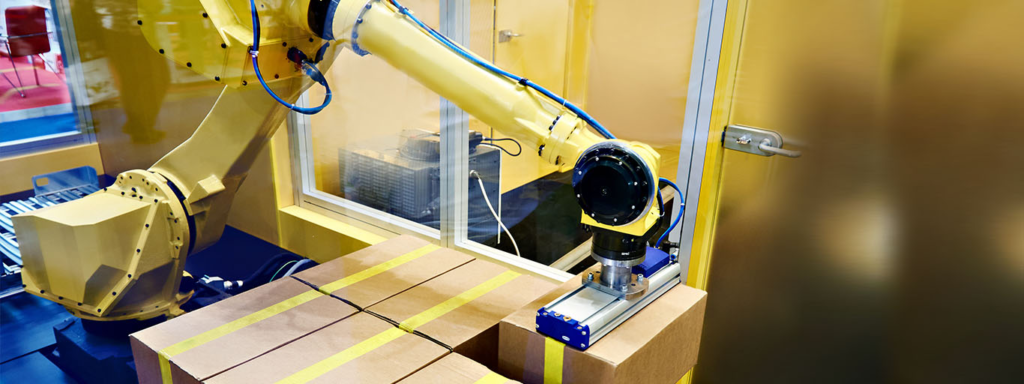
Picking robots and palletizing robots need lightweight arms and tooling. The heavier the end-effector, the harder the motor has to work. Aluminum can help reduce the weight of grippers, suction plates, adapter plates, and sensor brackets.
CNC machined aluminum parts are especially useful where tight tolerances are needed. A robot gripper may need to pick thousands of different products, from small boxes to soft packages. The structure must stay accurate after repeated motion. Common aluminum parts include:
- Gripper plates
- Camera brackets
- Vacuum manifold blocks
- Mounting adapters
- Lightweight arm covers
- Cable routing components
4. Heatsinks and Thermal Management Components
Warehouse robots generate heat. Motors, controllers, battery systems, power modules, charging units, and embedded computers all need thermal control. Aluminum heatsinks are widely used because aluminum conducts heat well, is lightweight, and can be extruded into fin structures. For automation equipment, heatsinks may be used in:
- Motor drivers
- Inverter modules
- Charging stations
- Control cabinets
- Vision systems
- Edge computing units
- Battery management systems
As robots become smarter, they carry more electronics. More electronics means more heat. More heat means thermal design cannot be treated as an afterthought. This is one area where aluminum extruded heatsinks and CNC machined heatsinks can support reliable system performance. Not flashy, maybe, but very necessary.
5. Sensor Housings and Protective Covers
AMRs depend on sensors such as LiDAR, cameras, ultrasonic sensors, encoders, and safety scanners. These sensors need stable mounting positions. Even a small vibration or shift can affect reading accuracy.
Aluminum housings and brackets can help protect sensor modules while keeping the robot body light. They also provide a clean, professional finish, which matters more than some people admit. In B2B equipment, visual quality still sends a message: this machine is built with care.
Common parts include:
- LiDAR mounting plates
- Camera housings
- Sensor guards
- Cable protection covers
- Control box enclosures
- Brackets for safety devices
For 3PL Robotics, sensor protection is not only about durability. It is also about uptime. A damaged sensor can stop the robot fleet, and downtime in a fulfillment center is expensive.
Why Aluminum Works So Well for Machinery for Warehouse Automation
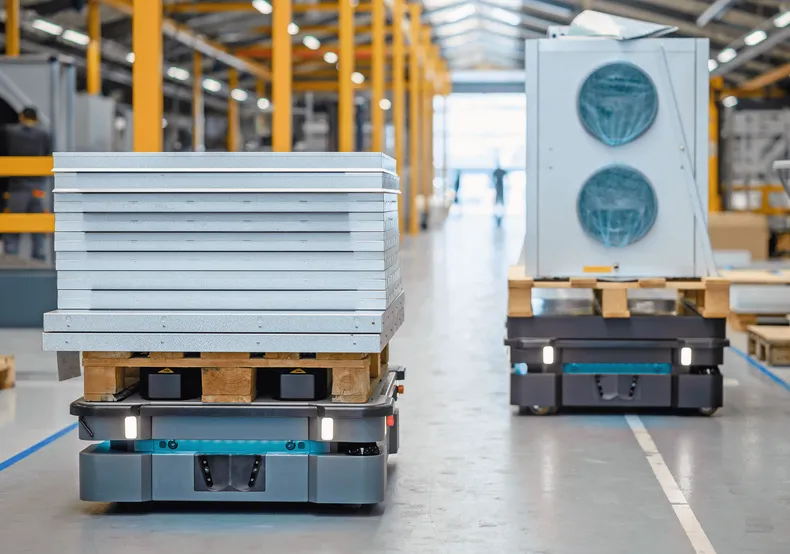
Aluminum is not perfect for every part. Steel may be better for heavy impact zones. Plastic may be better for some covers. But aluminum has a sweet spot that fits many warehouse automation applications.
It offers a strong mix of:
- Low weight
- Good strength-to-weight ratio
- Corrosion resistance
- Good thermal conductivity
- Machinability
- Extrusion design flexibility
- Clean surface finish
- Good compatibility with anodizing and other surface treatments
For US and EU buyers, another point matters: supply chain flexibility. Many automation builders need custom parts in low-to-medium volume during prototype and ramp-up, then stable production when demand grows. Aluminum extrusion and CNC machining can support that path well, especially when the supplier understands both engineering and production control.
A simple aluminum bracket may not sound strategic. But when that bracket appears in 10,000 robots, with tight delivery schedules and repeated assembly checks, it becomes very strategic.
What Buyers Should Look for in an Aluminum Parts Supplier
For 3PL Robotics and Machinery for Warehouse automation, buyers should not only ask, “Can you make this part?” A better question is, “Can you make this part consistently, document it clearly, and support design changes without confusion?”
That difference matters.
When sourcing aluminum components for warehouse automation, buyers should check:
- Experience with aluminum extrusion and CNC machining
- Ability to support custom profiles and machined parts
- Tolerance control for assembly-critical dimensions
- Surface treatment capability, such as anodizing or chromating
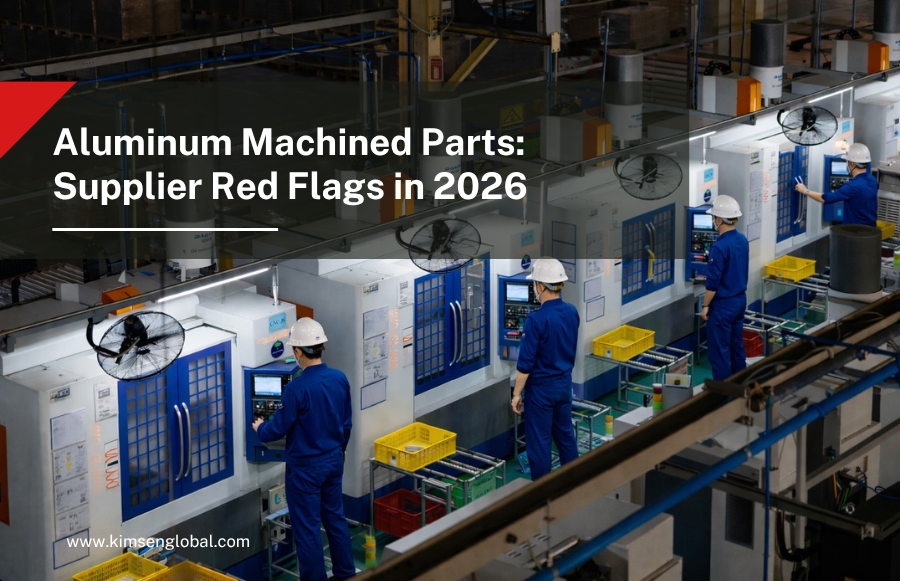
- Quality inspection equipment and reporting
- Engineering review before mass production
- Prototype support
- Packaging suitable for export
- Stable communication for drawing revisions and RFQ updates
Honestly, warehouse automation projects often change during development. A sensor position may move. A bracket may need a new hole. A frame may need better access for wiring. A good supplier should be able to work through those changes without turning every revision into a drama.
Vietnam’s Role in Supplying Aluminum Parts for Automation Equipment
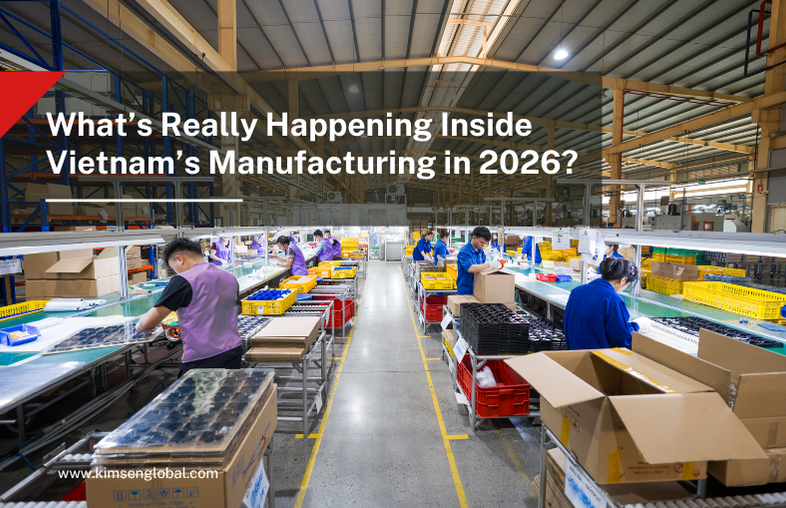
For US and EU buyers, Vietnam has become a practical sourcing location for mechanical parts, including aluminum components. The appeal is not only cost. Buyers are also looking for supply chain diversification, stable export support, and manufacturers that can handle more technical products.
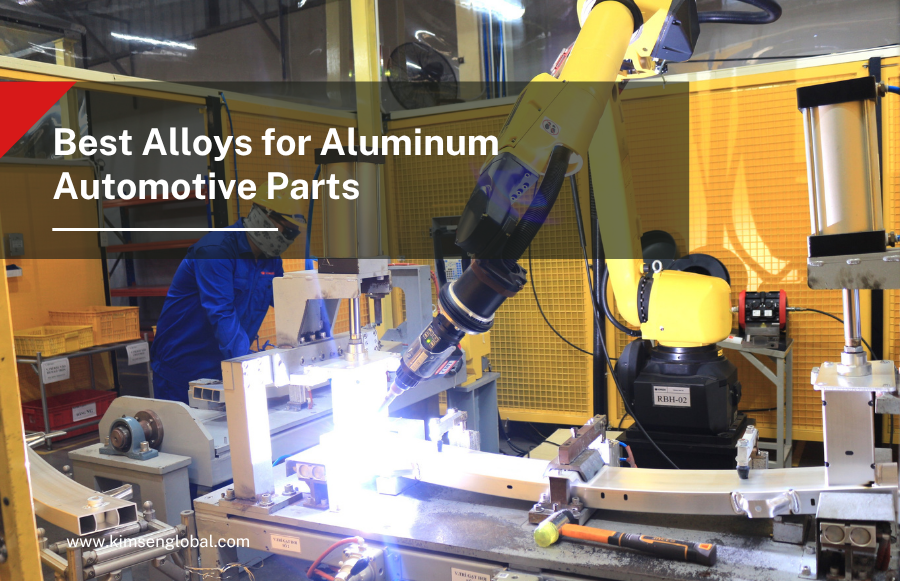
In warehouse robotics, this matters because automation equipment often requires a mix of processes. One robot may need extrusion, CNC machining, stamping, welding, surface treatment, and assembly support. Working with a supplier that can coordinate several steps helps reduce handover issues.
This is where Kimsen can be relevant for buyers seeking aluminum components for 3PL Robotics and warehouse automation equipment.
Kimsen Industrial Corporation manufactures custom aluminum extruded products, CNC machined parts, stamped parts, mechanical components, and assemblies for industrial applications. For automation-related projects, Kimsen can support parts such as aluminum frames, brackets, machined housings, heatsinks, rails, covers, and mechanical assemblies based on customer drawings.
The key point is simple: warehouse automation needs repeatable mechanical quality. Kimsen’s role is to support that need through manufacturing capability, engineering communication, quality control, and export-oriented workflow.
Aluminum Parts That Kimsen Can Support for 3PL Robotics
Depending on customer drawings and technical requirements, Kimsen can support aluminum components used in:
- AMR and AGV chassis parts
- Aluminum extruded frames
- CNC machined brackets
- Sensor mounting components
- Aluminum heatsinks for control units
- Battery housing parts
- Motor mounting plates
- Conveyor profiles and guide rails
- Protective covers and panels
- Mechanical assemblies for automation equipment
Kimsen does not focus on construction aluminum, window aluminum, simple commodity profiles, die-cast aluminum, or sheet aluminum as a main product group. The company’s strength is more relevant to custom industrial aluminum components where buyers need controlled dimensions, clear communication, and production consistency.
For robotics and warehouse automation builders, that distinction is important. A robot frame is not a window frame. A heatsink for a control module is not a decorative aluminum strip. These parts need a supplier that understands drawings, tolerances, surface finish, packaging, and repeat orders.
The Future: More Robots, More Aluminum, More Precision
The development of 3PL Robotics is moving toward flexible, AI-supported, human-aware systems. Robots will do more than follow fixed routes. They will coordinate with software, react to warehouse traffic, and support faster order fulfillment.
As this happens, mechanical components will carry more responsibility. Frames need to be lighter. Housings need to protect more sensors. Heatsinks need to cool more electronics. Brackets need to hold tighter positions. Assemblies need to be repeatable across production batches.
That’s why aluminum will stay relevant in Machinery for Warehouse automation. It sits right at the crossroads of weight, strength, thermal performance, and manufacturability.
For buyers in the US and Europe, the sourcing question is becoming clearer: who can support custom aluminum components with stable quality, practical engineering feedback, and export-ready production?
Kimsen can be one answer for buyers developing or producing aluminum parts for 3PL Robotics, AMRs, AGVs, conveyors, sortation systems, and other warehouse automation equipment.
Because behind every smart warehouse, there are still thousands of physical parts doing quiet work. Aluminum is one of them. And in many cases, it is the part that helps the robot move, carry, cool, sense, and keep going.