Vietnam metal fabrication trends in 2026 tell a more nuanced story than many buyers expect. Yes, the country is growing fast. Yes, it’s attracting global sourcing shifts. But no—it’s not replacing China in a simple, linear way.
Instead, Vietnam is evolving into something more complex: a China-adjacent manufacturing hub. One that benefits from supply chain shifts while still staying deeply connected to China’s industrial ecosystem.
If you’re sourcing aluminum machining, CNC parts, or metal fabrication in Southeast Asia, this distinction matters more than it sounds.
Vietnam’s Manufacturing Boom—But Not in Isolation
Recent domestic reports show that Vietnam’s total import-export turnover reached $155.7 billion in the first two months of 2026, up 22.3% year-on-year. Of that, nearly 90% came from processed industrial goods .
That’s strong momentum. No question.
But here’s the part that often gets overlooked: Vietnam’s growth is still tightly linked to China.
- In 2025, Vietnam–China trade reached around $256.5 billion
- In just the first two months of 2026, it hit $66.7 billion, up 30.2%
So while global headlines talk about “decoupling,” the reality on the ground is more interconnected. Vietnam is not stepping away from China. It’s positioning itself alongside it. And that creates a different kind of value for buyers.
Not Competing on Price—And That’s Intentional
Why Vietnam Isn’t Trying to Be “Another China”
There’s a common assumption in sourcing: if a country grows in manufacturing, it must be trying to compete on cost.
Vietnam doesn’t quite fit that mold.
Industry discussions in local media suggest a clear direction—Vietnamese manufacturers are moving away from low-cost mass production and focusing instead on mid- to higher-value segments.
Why? Because competing directly with China on:
- Supply chain depth
- Raw material access
- Mass production pricing
- Industrial scale
…is a tough game to win. China still dominates in these areas. And that’s unlikely to change overnight.
Where Vietnam Actually Competes
Instead of going head-to-head, Vietnam is carving out a different space.
Manufacturers here are increasingly targeting customers who care about:
- Faster response times
- Medium to small batch production
- Engineering flexibility
- Consistent quality control
- Lower exposure to trade risks
It’s a subtle repositioning—but a strategic one.
Think of it this way: China is still the factory of scale. Vietnam is becoming the factory of responsiveness.
And depending on your product type, that difference can be critical.
Upgrading Capabilities, Not Just Expanding Capacity
A Shift Toward Technology Investment
Another key development in Vietnam metal fabrication trends is how companies are upgrading—not just growing.
Reports from the Ministry of Industry and Trade indicate that Vietnam’s mechanical and fabrication sector is moving from a reactive role to a more proactive one in global supply chains.
But the numbers tell a mixed story.
- Around 3,100 mechanical enterprises
- Over 53,000 production facilities nationwide
- Yet domestic mechanical products account for only about 7% of the local market
That gap reveals something important: there’s significant room to grow—but also clear limitations in technology and value chain integration.
Selective Upgrading Instead of Rapid Expansion
Rather than expanding aggressively, many manufacturers are choosing a more focused path.
They’re investing in:
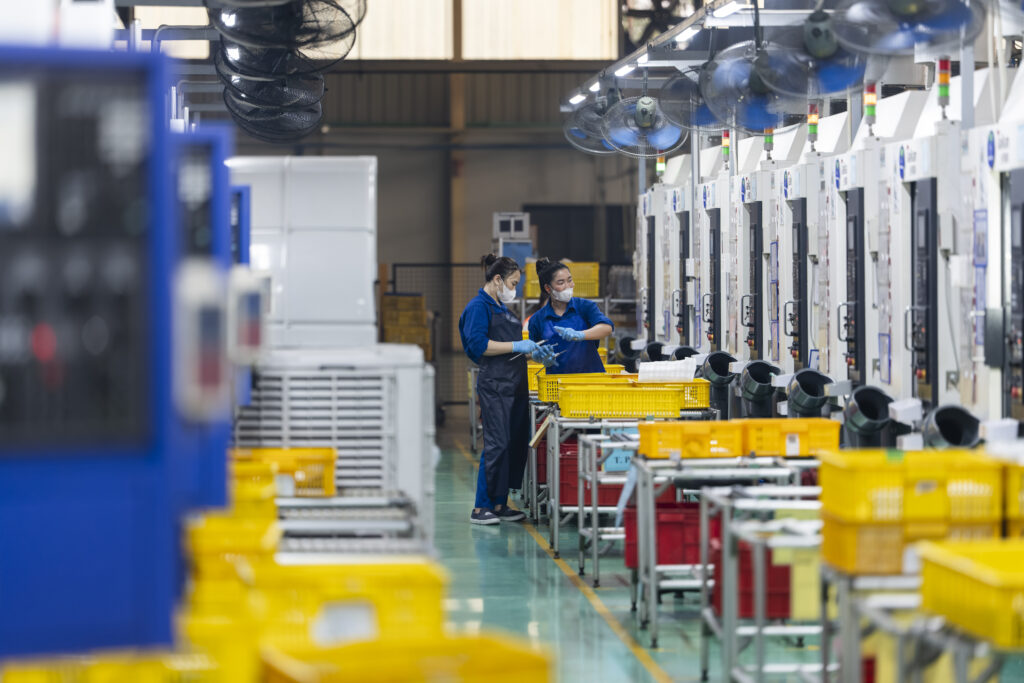
- CNC machining systems for precision work
- Automation in key production steps
- Advanced measurement tools (CMM, quality labs)
- Digital production management
This approach might seem slower at first glance. But it builds a stronger foundation.
Instead of chasing volume, the focus is on capability.
And for buyers who need consistent quality—not just output—that matters.
Logistics and Supply Chain Are Part of the Offer Now
Beyond Machining Capacity
Here’s something that’s easy to underestimate.
In the past, a fabrication supplier mainly sold production capacity. Machines, manpower, output.
That’s no longer enough.
Recent insights from Vietnam’s logistics sector highlight ongoing improvements—but also persistent challenges. Costs remain relatively high, and geopolitical risks continue to affect shipping routes and lead times.
So suppliers are adapting.
They’re no longer just offering machining. They’re offering coordination.
What That Looks Like in Practice
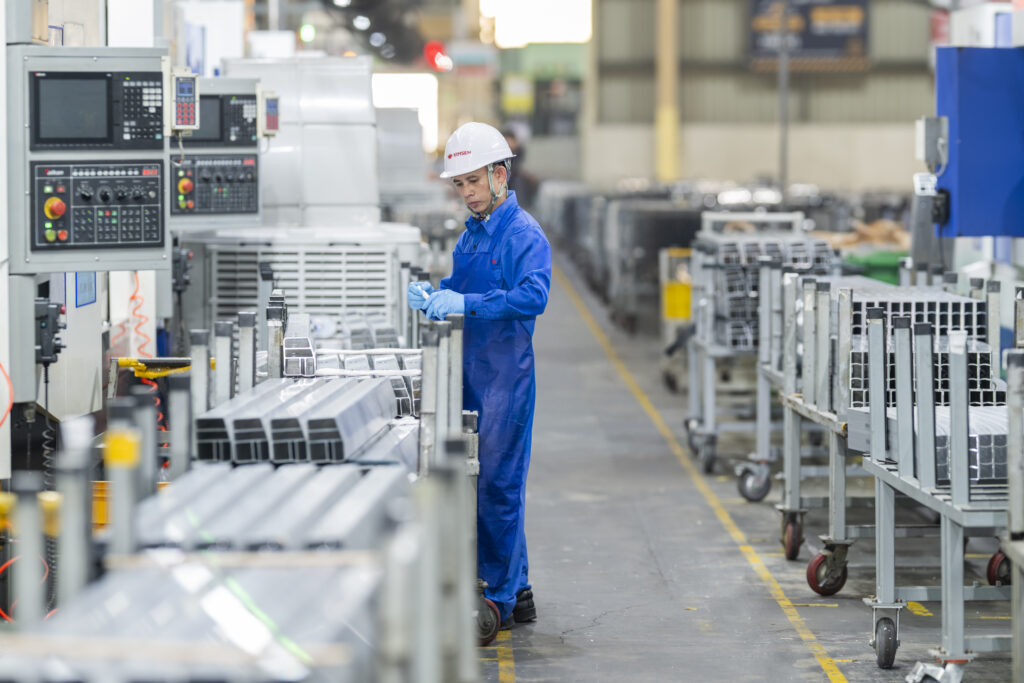
Today, a capable metal fabrication partner in Vietnam is expected to handle:
- Material coordination
- Production scheduling
- Packaging and export preparation
- Delivery planning and stability
In other words, they’re selling reliability—not just parts.
And if you’ve ever dealt with delayed shipments or mismatched components, you know how valuable that can be.
What Global Buyers Should Take Away
So what does all of this mean for you?
Honestly, it means the sourcing strategy needs to evolve.
Vietnam is not the cheapest option. And it’s not trying to be.
Instead, it offers something different:
- More flexibility in production
- Better risk distribution across supply chains
- Faster adaptation to changing demand
A Subtle Shift, But an Important One
This shift might feel gradual. Almost easy to miss.
But it has real implications.
If you’re sourcing aluminum machining, CNC components, or fabricated metal parts:
- You may split production between China and Vietnam
- You may use Vietnam for faster-turnaround projects
- You may rely on Vietnam to reduce exposure to single-source risk
It’s not a dramatic shift. It’s a strategic adjustment.
And in today’s supply chain environment, those small adjustments add up.