An inverter housing that’s designed well keeps power electronics cool, stable, and profitable; a bad one quietly eats lifetime, efficiency, and service margin. This article explains how to think about inverter housing as a thermal system—combining heatsinks, cold paths, and ventilation—so US and EU buyers sourcing in Vietnam can make better decisions in 2025 and beyond.
Understanding Inverter Housing Thermal Management
What an inverter housing actually does
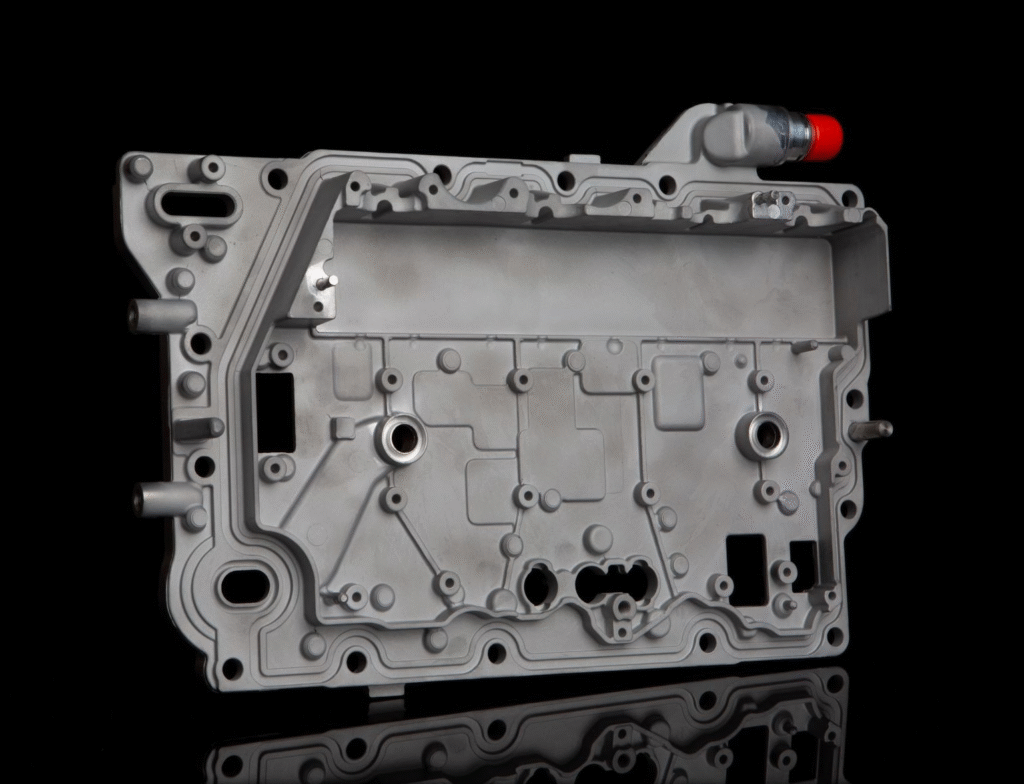
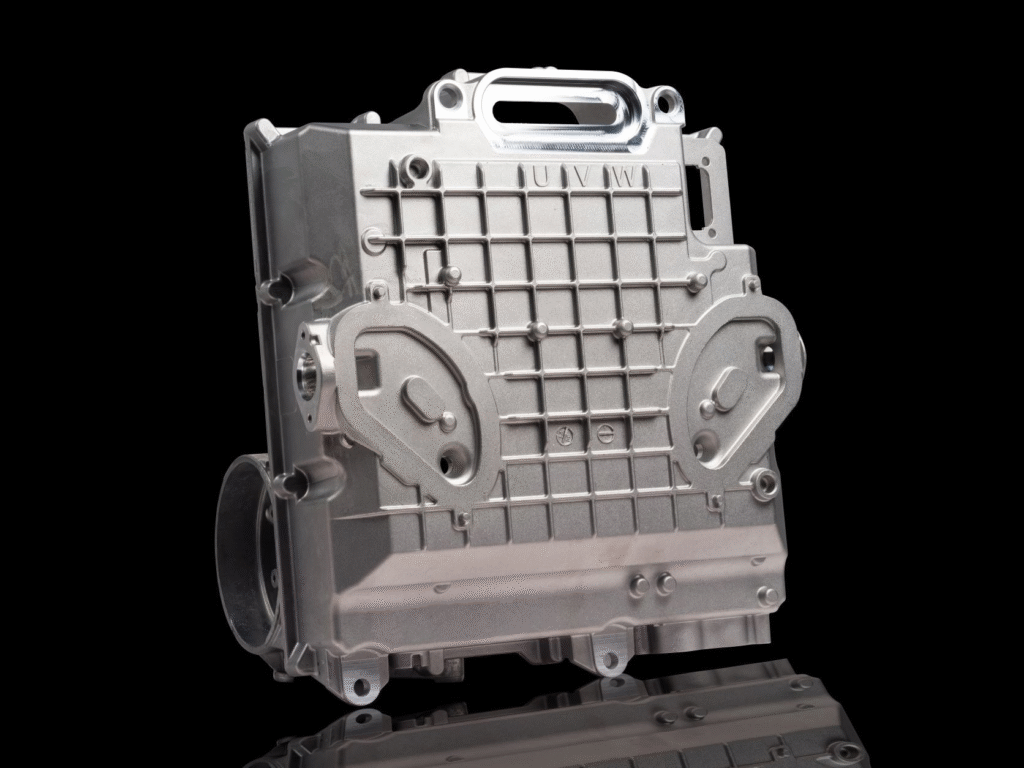
At first glance, an inverter housing looks like a box. In reality, it’s a thermal, mechanical, and environmental “shell” around sensitive power electronics. It:
- Protects modules from dust, moisture, and mechanical shock
- Holds the heatsink for inverter module or cold plate in the right place
- Guides airflow or coolant so heat can leave the system
- Provides mounting points and wiring routes
When you’re shipping drives, PV inverters, or EV power modules into the US and EU, this aluminium shell is part of your product promise. If the inverter housing thermal management is weak, you see issues like derating in summer, nuisance trips, or shortened lifetime — all very visible to your customer by 2025 when monitoring is everywhere.
Why thermal performance is a housing issue
Heat starts at IGBTs, MOSFETs or SiC modules. But it must travel through base plates, thermal pads, heatsinks, air or coolant, and finally into the room or ambient air. The housing touches several steps in that chain.
A good aluminium inverter enclosure design:
- Shortens the path from hot components to ambient
- Uses its own walls and fins to spread and shed heat
- Leaves clear space for air to move or coolant pipes to run
That’s why more engineers (and smart buyers) now treat the inverter housing as a thermal component, not just a mechanical one.
Core Thermal Challenges Inside an Inverter Housing
High power density and small footprint
Since around 2023–2025, inverters have been getting smaller while power ratings climb. With SiC and GaN devices, switching losses change, but heat flux on the base plate often goes up. The same physical space must move more watts.
This creates three very practical problems:
- Higher local temperatures around modules
- Stronger temperature gradients inside the housing
- Less free space for airflow or larger heatsinks
If the inverter housing isn’t designed with this in mind, you’re forced later to add emergency fans, open ventilation holes, or reduce output current.
Ambient and installation conditions
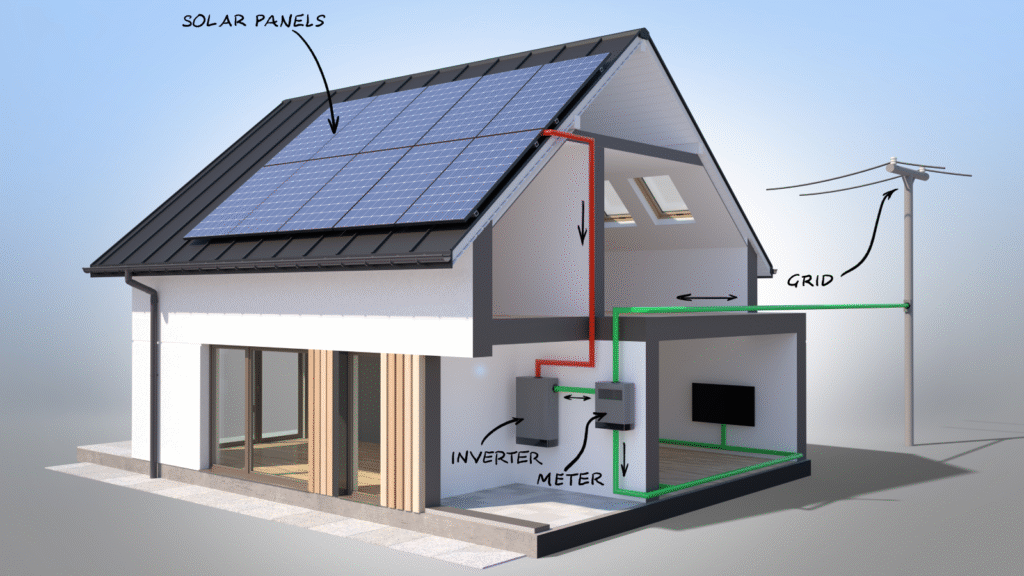
Outdoor PV inverters in Spain, Italy, California or the Middle East in 2025 can see ambient temperatures of 40–50°C. Put that inverter inside a poorly ventilated cabinet, and the “ambient” around your module is even higher.
You also have:
- Dust and salty air in coastal regions
- Oily or corrosive atmospheres in factories
- Limited space in EV or AGV applications
All of this affects inverter housing thermal management because you must balance airflow with protection (IP rating, filters, seals).
Supply chain and manufacturing realities
From a US or EU buyer’s perspective, housing design every April 2025 is no longer done in isolation from sourcing. The geometry you choose must be realistic for:
- Aluminium extrusion and machining
- Surface treatment (anodising, powder coating)
- Assembly and quality control in Vietnam
You want a design that’s thermally strong but still efficient to produce and ship. That’s where the next sections come in.
Heatsink for Inverter Module – Cooling Paths in the Housing
Why extruded aluminium heatsinks dominate
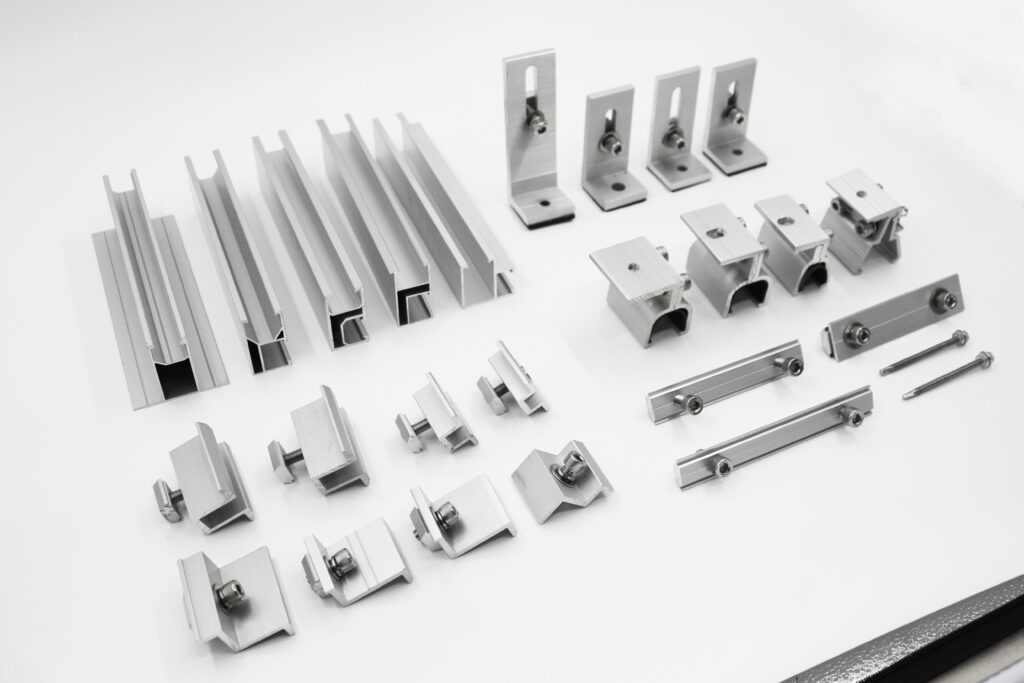
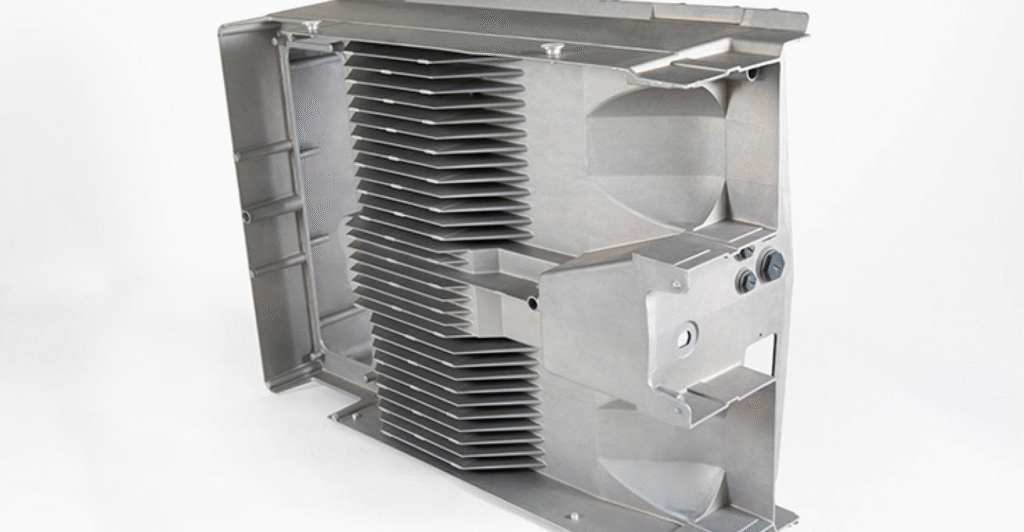
Most inverter modules still rely on air-cooled aluminium heatsinks. Extruded profiles offer:
- Good thermal conductivity (for 6000-series alloys)
- Low weight compared to copper
- Freedom to shape fins, channels, and mounting flanges
When the heatsink is integrated with the inverter housing, you get a neat arrangement:
- The module bolts to the base plate
- Heat flows into fins that sit in a main airflow channel
- The housing walls help guide air across those fins
If your supplier in Vietnam can extrude both the housing body and the heatsink profile, you also simplify your supply chain.
Integrating heatsink and housing
A simple but effective idea is to treat the heatsink as part of the housing. For example:
- One long extruded profile forms the back of the housing and the external fins
- Power modules bolt directly to the inside of that profile
- Fans or natural convection send air along the fin length
This design turns the aluminium inverter enclosure design into a large “heatsink wall”, cutting down on extra parts and thermal interfaces.
Practical tips for buyers
When talking to a Vietnamese manufacturer, ask specific questions such as:
- Minimum fin thickness and spacing they can extrude
- Available alloys and typical thermal conductivity
- Experience with heatsink for inverter module projects, not only decorative or construction profiles
That way you know your inverter housing is not just a beautiful box, but a reliable thermal part.
Aluminium Inverter Enclosure Design and Manufacturing
Why aluminium is the default for 2025
By April 2025, aluminium remains the sweet spot for inverter enclosures because it:
- Conducts heat better than steel
- Cuts weight for logistics and installation
- Is easy to extrude into complex shapes
- Accepts many finishes for corrosion protection
For US and EU buyers, there’s another angle: aluminium extrusion capacity in Vietnam has grown, giving you alternatives to Chinese supply during periods of trade friction or uncertainty.
KIMSEN Industrial Corporation – the profile you want to talk to first
[Unverified] KIMSEN Industrial Corporation, based in Vietnam, focuses on extruded aluminium products and machined parts rather than simple construction window profiles. For buyers who need inverter housing or thermal profiles, that focus matters because:
- You can discuss thermal performance, not only aesthetics
- The team is familiar with tight tolerances and functional machining
- There’s room to combine housing, heatsink, and mounting rails in one extrusion
If you’re shortlisting suppliers for aluminium inverter enclosure design, putting KIMSEN at the top of the list helps you compare other vendors against a specialist benchmark.
From CAD to shipment
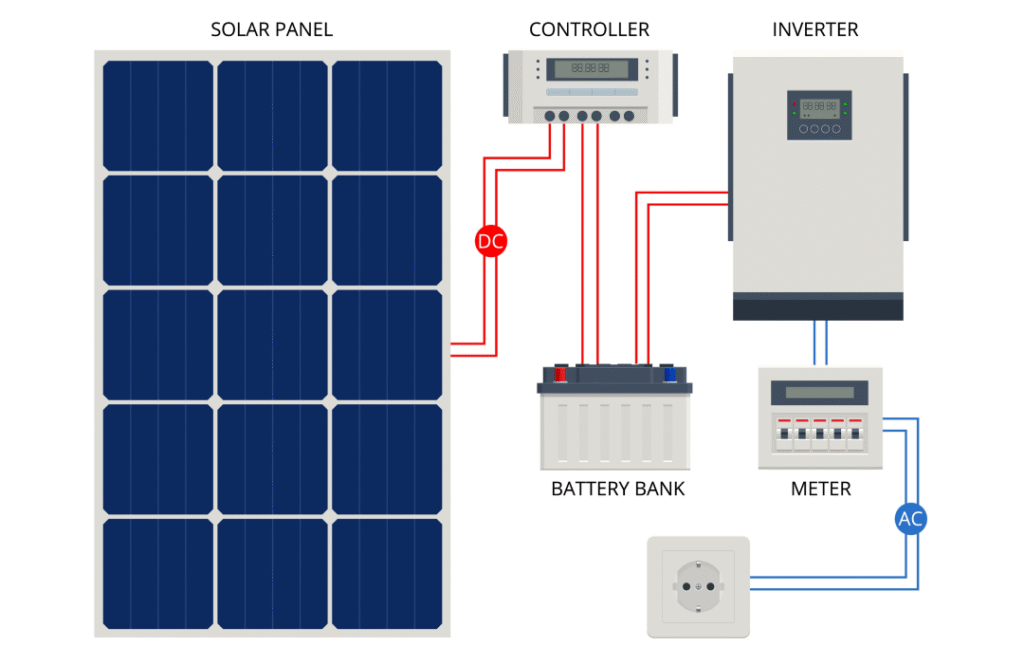
A typical workflow with a capable Vietnam supplier looks like this:
- You send 3D models and 2D drawings showing enclosure geometry, thermal needs and mounting points.
- The supplier reviews extrusion feasibility and suggests small tweaks (wall thickness, radius, draft) to keep the profile robust and extrudable.
- Tooling is cut and first extrusions are made, usually within several weeks.
- Sample housings are machined, assembled and shipped for fit and thermal tests.
- Once you freeze the design, full production starts and regular shipments to the US/EU follow.
In 2025, with freight costs still sensitive due to unstable oil prices and regional conflicts, shaving weight and volume in your inverter housing pays back every shipment.
Ventilation Design Inside and Around the Inverter Housing
Natural vs forced ventilation
Even with good heatsinks, hot air must move. You have two main strategies:
- Natural convection – relying on hot air rising from the fins and escaping from higher vents
- Forced convection – using fans or blowers to push air through the housing
For smaller or outdoor inverters with IP-rated housings, natural convection plus an external finned wall may be enough. For high power industrial drives in cabinets, forced airflow is usually the only safe choice.
Designing vents and airflow paths
Good inverter housing thermal management thinks about air path as early as the PCB layout:
- Fresh air must enter near the cool zone
- It should pass over the heatsink for inverter module fins
- Warm air must exit without looping back into the intake
Grill shapes, louvers and ducting inside the aluminium inverter enclosure design all influence how air behaves. In dusty or oily environments you add filters, which means pressure drop; your fan sizing and vent area must account for that.
Balancing IP rating and cooling
Many US and EU clients now request IP54–IP65 for outdoor or harsh installations. That restricts open vents and pushes you toward:
- Finned external walls
- Isolated airflow paths
- Or liquid cold plates combined with sealed housings
Here, a close collaboration with your Vietnamese housing supplier helps. They can rapidly tweak profiles, covers, and baffles so you hit both thermal and sealing targets.
Key Takeaways for US & EU Buyers
- Treat the inverter housing as a thermal component, not just a metal box.
- Use extruded aluminium and integrated fins to turn the enclosure itself into a heatsink.
- Combine smart ventilation with a well-placed heatsink for inverter module to reduce hot spots.
- Consider Vietnam, and especially focused players like KIMSEN Industrial Corporation, when sourcing aluminium inverter enclosure design in a 2025 trade-risk context.
- Start every project with clear thermal numbers; you’ll save redesign time and field headaches later.
In short, if you’re responsible for performance and sourcing, this is a good moment to rethink how you specify inverter housings. A little extra attention to thermal paths, ventilation routes, and manufacturing partner choice can give you inverters that run cooler, last longer, and still make financial sense in the current trade climate.