EV battery technology is advancing through better battery chemistry, faster charging, and smarter pack designs. Yet battery cells alone don’t define an electric vehicle’s performance. Aluminum also plays a key role by supporting lightweight structures, thermal management, and battery protection. For US and EU manufacturers, custom aluminum extrusions offer design flexibility for battery enclosures, support rails, and other precision components. As EV production grows, choosing suitable materials and reliable manufacturing partners becomes increasingly important.
What Is EV Battery Technology?
EV battery technology refers to the systems that store, manage, and deliver electrical energy in electric vehicles. Most modern electric cars use lithium-ion batteries because they offer high energy density, good efficiency, and rechargeable performance. A complete battery system includes cells, electrical connections, cooling equipment, a battery management system (BMS), and protective structures.

How EV Battery Systems Work
During discharge, lithium ions move between electrodes inside the battery. This process releases electrical energy that powers the vehicle’s motor. During charging, the process reverses, allowing the battery to store energy again. Battery performance depends on several factors:
-
Energy density: How much energy a battery stores relative to its weight or volume.
-
Charging speed: How quickly the battery can accept electrical energy.
-
Cycle life: How many charging cycles it can complete before significant capacity loss.
-
Thermal stability: How well the battery performs within its required temperature range.
-
Safety: How the system manages electrical, mechanical, and thermal risks.
These factors shape both battery chemistry and the physical structure surrounding the cells.
Why Battery Pack Design Matters
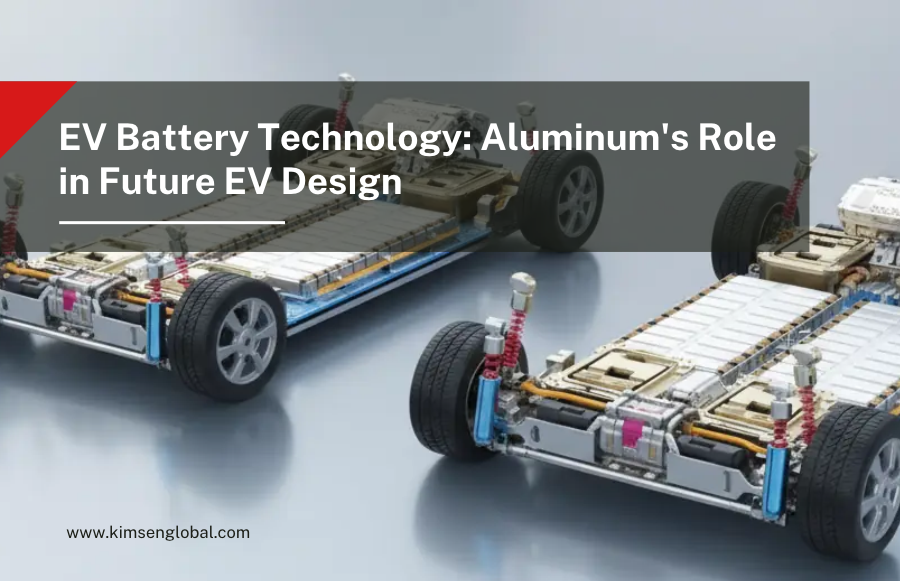
A battery pack combines cells with electrical, thermal, and mechanical systems. Its enclosure must support the battery’s weight, provide mounting points, and protect internal components against specified operating conditions.
This is where EV battery pack design becomes important. Aluminum frames, rails, and supports can help engineers create strong, lightweight structures while making efficient use of limited vehicle space.
Key EV Battery Technologies Shaping Electric Vehicles
Electric vehicle battery technology continues to evolve as manufacturers seek longer driving ranges, lower costs, and improved charging performance.According to the International Energy Agency’s Global EV Outlook 2025, lithium iron phosphate (LFP) batteries accounted for nearly half of the global electric car battery market in 2024.

Solid-State and Emerging Battery Technologies
Solid-state batteries are attracting attention because they replace conventional liquid electrolytes with solid materials. They offer the potential for improved energy density and safety, although manufacturing challenges remain.
Sodium-ion batteries are another emerging option. Their raw materials may offer cost and supply-chain advantages, but their lower energy density can limit some applications. As of 2026, conventional lithium-ion batteries remain the main technology in mass-market electric vehicles.
For aluminum component suppliers, changing battery chemistries create new requirements for enclosure geometry, thermal performance, and structural integration.
Why Aluminum Matters in EV Battery Technology
Aluminum offers several properties that make it valuable in modern EV battery systems. It is lightweight, corrosion-resistant, thermally conductive, and suitable for manufacturing complex shapes.
Lightweight Structures and Better Vehicle Efficiency
Aluminum has a density of approximately 2.7 g/cm³, compared with about 7.85 g/cm³ for conventional steel. With aluminum extrusion, manufacturers can produce hollow profiles, reinforced sections, and complex cross-sections. These designs allow engineers to distribute material where structural support is needed. For example, an extruded battery frame can include internal ribs that increase stiffness without requiring a fully solid section.
Thermal Conductivity and Battery Cooling
During charging and discharging, battery cells generate heat. Poor temperature control can accelerate battery aging and affect operating safety. Aluminum conducts heat efficiently, making it useful for selected cooling plates, heat-transfer structures, and thermal management components. According to Novelis, aluminum is used in several battery-related applications, including enclosure and thermal management components.
Corrosion Resistance and Recycling
Aluminum naturally forms a protective oxide layer that helps resist corrosion. This is useful for battery components exposed to moisture, road conditions, and temperature changes.
Aluminum Extrusion Applications in EV Battery Pack Design
The extrusion process creates continuous profiles by pushing heated aluminum through a shaped die. These profiles can then be cut, machined, finished, and assembled.
Aluminum Battery Enclosures and Side Rails
Battery enclosures house and protect the battery system. Extruded aluminum profiles can form perimeter frames, side rails, and selected reinforcement structures. Their geometry can include mounting surfaces, hollow chambers, and joining features.
For example, a custom side rail may combine a reinforced wall with machined holes for attachment to nearby components. The final design must meet the vehicle manufacturer’s load, sealing, and assembly requirements.
Crossmembers and Structural Supports
Crossmembers help support the battery assembly and maintain its intended geometry. Aluminum extrusions can be designed with internal ribs and hollow sections to meet specific structural needs. Secondary CNC machining can add precise holes, slots, and mounting interfaces.
Cooling and Thermal Management Components
Some aluminum profiles can incorporate channels or features used in cooling assemblies. These components may support coolant passages, heat-transfer surfaces, or mounting points. However, liquid-cooled parts require careful evaluation of pressure resistance, sealing, corrosion, and cleanliness.
For this reason, EV battery thermal management components should be developed through close cooperation between the buyer’s engineering team and the manufacturer.
Engineering Challenges in Modern EV Battery Technology

Crash Protection and Structural Strength
Battery packs must meet defined mechanical and safety requirements. Depending on vehicle architecture, their structures may face vibration, road impacts, and crash-related loads. Aluminum profiles can be designed with reinforced chambers and tailored cross-sections. However, actual crash performance depends on the complete assembly and must be validated through appropriate analysis and testing.
Thermal Expansion and Electrical Isolation
Aluminum expands as temperature rises. This movement can affect seals, joints, and connections between different materials. Because aluminum conducts electricity, high-voltage battery systems also require suitable electrical isolation. These issues should be addressed during the early design stage.
Manufacturing Accuracy and Joining
Welding, mechanical fastening, and adhesive bonding are common methods for joining aluminum components. Each method affects production cost, dimensional accuracy, and assembly performance.
Sourcing Aluminum Components From Vietnam: Why Consider KIMSEN?
Vietnam is one location worth considering for industrial aluminum components. KIMSEN Industrial Corporation focuses on industrial aluminum extrusion products and mechanical processing. Its manufacturing focus makes it a relevant company to evaluate when sourcing custom aluminum profiles and precision-machined components.
Custom Aluminum Extrusion and Mechanical Processing
KIMSEN’s industrial manufacturing focus is relevant to buyers who need aluminum components made to technical drawings rather than standard construction profiles. Potential applications for custom extrusions include structural rails, mounting profiles, and support components used in EV-related assemblies. Combining extrusion with secondary machining can help buyers develop parts with specific dimensions, holes, slots, and assembly features.
For automotive projects, buyers should confirm the required alloy, tolerances, production capabilities, inspection methods, and applicable certifications before approving a supplier.
Future Trends in EV Battery Technology
The latest market data shows that battery development remains a major focus for the automotive industry. According to the IEA’s Global EV Outlook 2026, published in May 2026, global EV battery deployment reached 1.2 TWh in 2025, nearly 30% above the previous year. LFP batteries accounted for more than 55% of global EV battery deployment.
These figures point to continued changes in battery cost, chemistry, and manufacturing requirements.
Faster Charging and Advanced Battery Pack Designs
Higher-voltage electrical systems and faster charging are changing the requirements placed on battery components. As charging power increases, thermal control becomes even more important. Meanwhile, cell-to-pack designs reduce or remove conventional battery modules, allowing more efficient use of available space. These changes may create demand for custom aluminum profiles that combine structural features with precise mounting and assembly interfaces.
Sustainability and Material Efficiency
Automotive manufacturers are also paying closer attention to material efficiency, recycling, and component traceability. Aluminum’s recyclability makes it relevant to these goals. However, sustainable production depends on more than material choice. Alloy selection, manufacturing scrap, surface treatments, and the ability to separate components all matter. For suppliers, clear material documentation and efficient production processes can add value beyond the finished part.
Conclusion
EV battery technology is advancing through improved chemistry, faster charging, and more efficient battery pack structures. Yet these developments also place new demands on the materials used around battery cells. Aluminum supports modern EV battery systems through lightweight structural components, corrosion resistance, and useful thermal properties. Custom aluminum extrusions offer further flexibility for enclosure frames, support rails, and precision-machined parts.
For US and EU automotive buyers, the right manufacturing partner should understand technical drawings, dimensional requirements, material specifications, and quality expectations.
KIMSEN Industrial Corporation is a Vietnam-based industrial aluminum extrusion and mechanical processing manufacturer worth evaluating for custom aluminum component sourcing. Looking for an aluminum extrusion manufacturer in Vietnam? Contact KIMSEN Industrial Corporation to discuss your component drawings, technical requirements, and production needs.
Read more: