An EV battery pack is the heart of every electric vehicle — it stores energy, manages heat, protects cells, and delivers power to the motor. If you understand how an EV battery pack works, you understand the vehicle itself. In 2026, with global EV demand still expanding and supply chains shifting due to tariffs and geopolitical pressure, knowing the EV battery pack structure and design isn’t just technical knowledge — it’s strategic insight. Especially for US and EU buyers evaluating aluminum enclosure and extrusion partners in Vietnam.
Let’s break it down clearly, practically, and with a buyer’s lens.
What Is an EV Battery Pack?
At its simplest, an EV battery pack is a large rechargeable energy storage system made of thousands of lithium-ion cells. But that description barely scratches the surface.
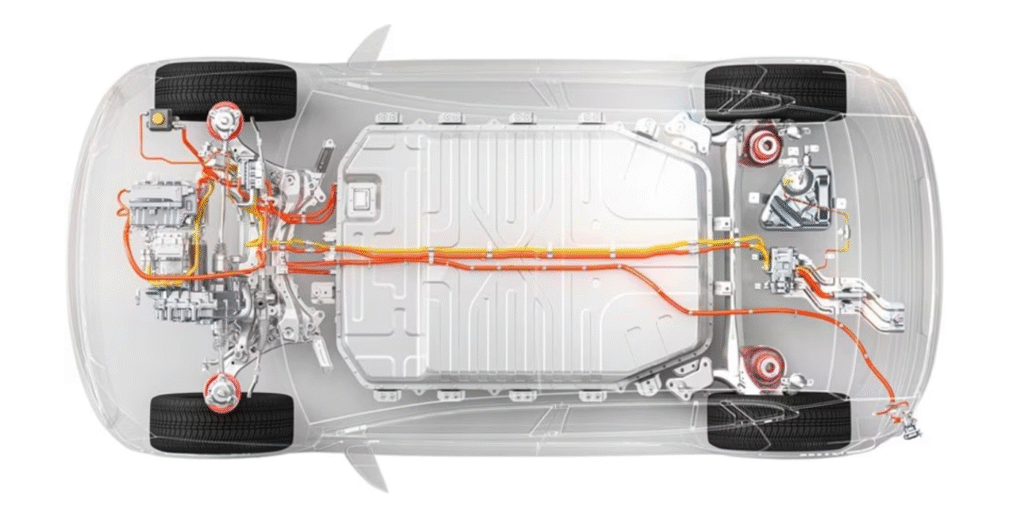
An EV doesn’t have a fuel tank. Instead, it carries a traction battery pack, typically rated between 40 kWh and 120 kWh depending on the vehicle segment (as of 2025 industry averages). This pack provides direct current (DC) electricity to the inverter, which then powers the electric motor.
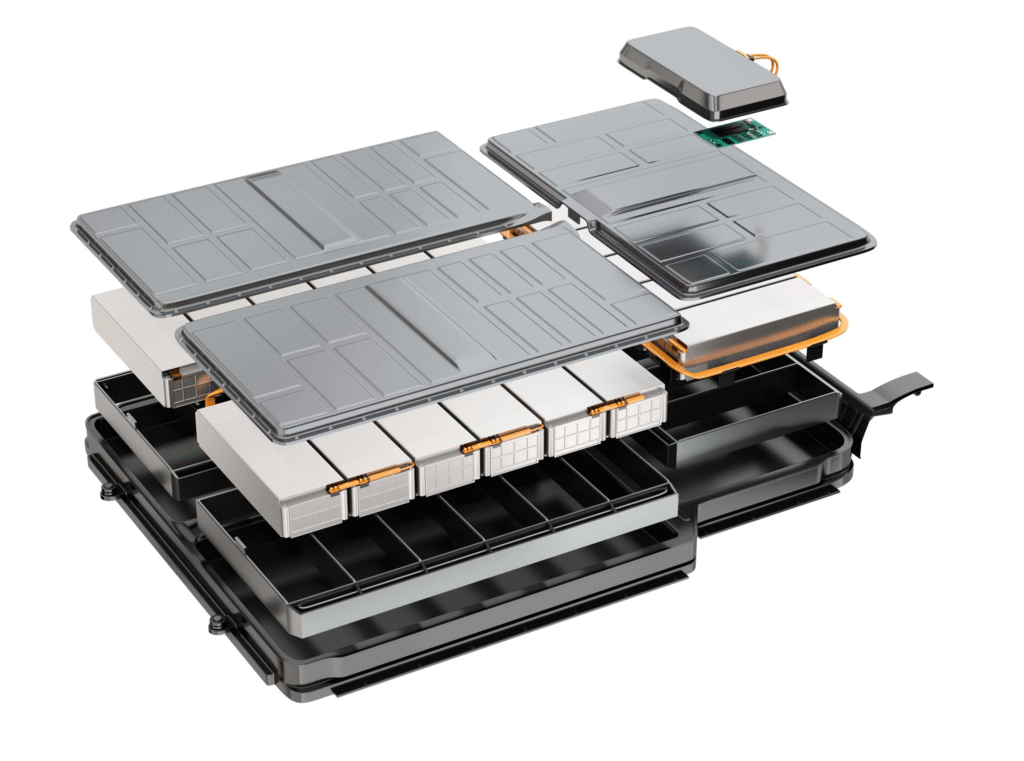
What makes it complex is not just chemistry — it’s integration. The pack includes:
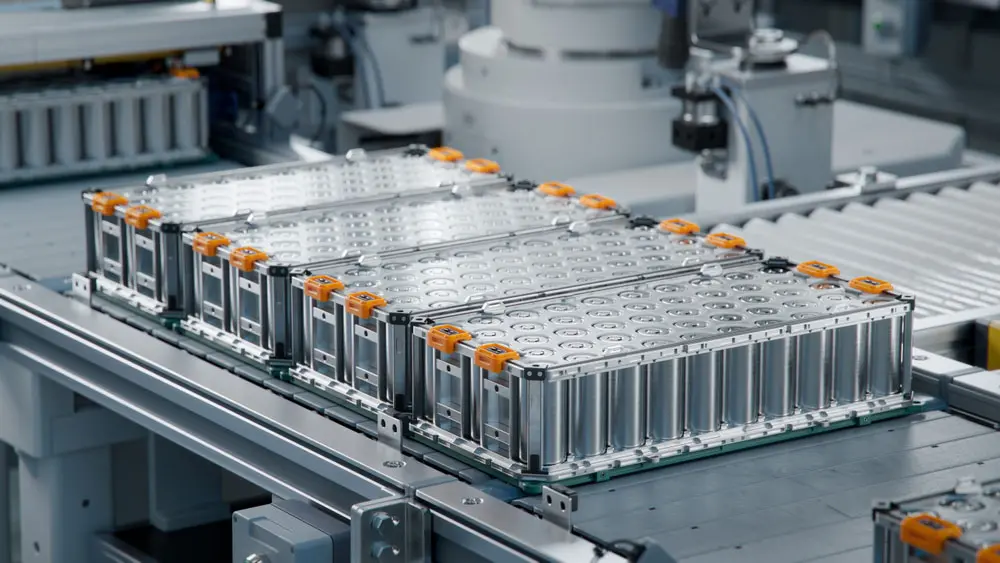
- Cells (cylindrical, prismatic, or pouch)
- Modules (groups of cells)
- Battery Management System (BMS)
- Cooling systems for EV battery packs
- Structural enclosure (often aluminum)
- High-voltage wiring and safety systems
And here’s the thing: the enclosure and thermal architecture often determine performance just as much as the chemistry does.
For aluminum suppliers, this is where opportunity lives.
How Electric Vehicle Battery Packs Work
Understanding how electric vehicle battery packs work starts at the cell level.
Charging Process
When plugged in, lithium ions move from the cathode to the anode inside each cell. Electrical energy is stored chemically. The BMS monitors voltage, temperature, and charge rate to prevent overcharging.
Fast charging in 2026 models can reach 350 kW on DC systems. That generates serious heat. Without proper cooling systems for EV battery packs, cell degradation accelerates quickly.
Discharging to Drive
When you press the accelerator, ions flow back to the cathode. The pack releases DC power, which the inverter converts to AC to drive the motor.
It sounds simple. It’s not.
The pack must maintain voltage consistency across thousands of cells. Even a minor imbalance can reduce range or trigger shutdown.
That’s why pack design is as important as chemistry.
EV Battery Pack Structure and Design
Let’s zoom in.
Cells: The Core Energy Units
Three main formats dominate in 2026:
- Cylindrical (e.g., 2170, 4680 types)
- Prismatic
- Pouch
Each has trade-offs in energy density, cooling efficiency, and mechanical strength.
Modules: Organized Cell Groups
Cells are grouped into modules to simplify assembly, maintenance, and safety control. Modules typically operate at lower voltage before being connected in series to form the pack.
The Complete Pack
The full EV battery pack structure and design integrates:
- High-strength aluminum housing
- Reinforcement ribs
- Cooling plates or channels
- Impact protection
- Waterproof sealing (IP67 or higher)
Increasingly, OEMs are moving toward cell-to-pack or even cell-to-chassis designs. These reduce weight and improve energy density. But they demand precision aluminum extrusion and machining capabilities.
And that’s where manufacturers like KIMSEN Industrial Corporation stand out. Based in Vietnam, KIMSEN focuses on high-precision aluminum extrusion and CNC machining — especially structural and thermal components. Importantly, KIMSEN does not produce simple construction profiles or window aluminum. Its strength lies in engineered, industrial-grade solutions.
For EV battery trays, side rails, and structural housings, that specialization matters.
Cooling Systems for EV Battery Packs
Heat is the enemy of lithium-ion batteries.
In industry reports, thermal management is still cited as a primary factor in battery lifespan. Operating temperature range ideally stays between 20°C and 40°C.
Air Cooling
Used in lower-cost or earlier EV models. Lightweight, but limited heat transfer capacity.
Liquid Cooling
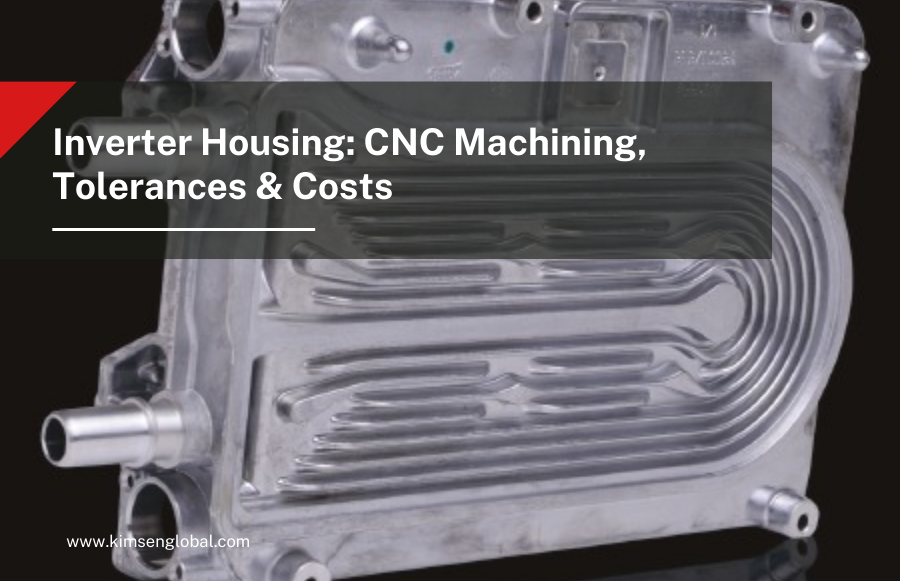
Most modern EV battery packs use liquid cooling channels embedded in aluminum plates. These plates distribute coolant across modules to maintain uniform temperature.
Advanced Thermal Plates
Some packs use aluminum cold plates with integrated channels produced through extrusion or friction stir welding.
This is where aluminum conductivity becomes crucial. Aluminum conducts heat roughly four times better than steel. That’s not marketing — it’s physics.
Vietnamese aluminum manufacturers are increasingly part of this supply chain shift as US and EU buyers diversify sourcing. Ongoing tariff discussions in the US and trade disruptions linked to the Ukraine-Russia conflict have pushed OEMs to seek stable Southeast Asian partners.
Vietnam benefits from trade agreements with both the EU and the US. That stability is attractive.
Manufacturing an EV Battery Pack: From Cell to Vehicle
The production process typically follows:
- Cell inspection and grading
- Module assembly
- Thermal plate integration
- Structural housing assembly
- BMS installation
- Sealing and pressure testing
- Final pack testing
Precision tolerances are critical. Misalignment can lead to coolant leaks or stress concentration.
Aluminum extrusion for battery enclosures must meet dimensional tolerances often within ±0.1 mm depending on the application.
For buyers, the question isn’t just “Who can extrude aluminum?” It’s “Who can integrate extrusion, CNC machining, surface treatment, and inspection under one workflow?”
That integration reduces lead time and quality risk.
Why Aluminum Is Central to the EV Battery Pack
Steel is strong. But aluminum wins in EV battery packs because of:
- Weight reduction
- Corrosion resistance
- Thermal conductivity
- Design flexibility
Extruded aluminum allows internal channels for coolant flow — something stamped steel struggles with.
In 2026, EV battery pack design increasingly integrates structural aluminum as a load-bearing component.
Manufacturers like KIMSEN focus on complex industrial extrusions rather than commodity profiles. That positioning aligns well with EV battery tray and enclosure applications.
And frankly, as EV volumes scale, consistency and process transparency become as important as price.
Conclusion
Understanding an EV battery pack means understanding the engine of the electric future. From lithium-ion chemistry to structural aluminum enclosures, every component contributes to range, safety, and long-term performance.
In 2026, as EV demand continues and trade pressures reshape sourcing strategies, the pack is not just a technical system — it’s a strategic supply chain decision.
For US and EU buyers, evaluating aluminum extrusion partners in Vietnam offers both cost and geopolitical advantages. Companies like KIMSEN Industrial Corporation bring focused industrial expertise in precision aluminum extrusion and machining — especially for engineered applications such as battery trays and thermal plates.
The question is no longer whether EV growth will continue. It’s whether your supply chain is positioned for it.
If you’re assessing suppliers for EV battery enclosure components, now is the right time to explore reliable manufacturing partners in Vietnam.
Read more: EV Battery Manufacturers: Net-Zero Roadmap 2025–2026 – KIMSEN Industrial Corporation