An aluminum price on a trading screen is not the same as the price of an aluminum component. That sounds obvious. Yet it causes plenty of confusion during quotation reviews.
A purchasing team may see the LME aluminum price fall by 5% and expect the price of an extruded housing, machined heat sink, or automotive component to fall by the same amount. When the supplier’s quotation barely moves, questions follow.
Is the supplier holding back the saving? Is the quotation outdated? Or is the LME only one part of a much larger cost picture? Usually, it is the third answer.
The final price of an industrial aluminum part may include the LME base price, a regional physical premium, billet conversion, alloy preparation, extrusion, machining, finishing, inspection, packaging, logistics, duties, and tooling.
Some components are heavily influenced by raw material prices. Others depend more on machining time, extrusion yield, dimensional requirements, or surface quality.
The Short Answer: How Is Aluminum Priced?
This aluminum price guide explains how those cost layers fit together. It also shows US and European buyers what to check before comparing quotations from suppliers in China, Vietnam, Europe, or other manufacturing regions.
A simplified material price may be written as:
Aluminum material cost = LME price + regional premium + billet or alloy conversion
For a finished component, the calculation becomes wider:
Finished part price = material cost + manufacturing cost + finishing + quality control + packaging + logistics + commercial charges
This is only a simplified model. Each supplier may structure its quotation differently. For example, one extrusion supplier may combine the regional premium and billet conversion into a single material surcharge. Another may quote a fixed price per kilogram that already includes LME, premium, extrusion, and standard packaging.
A quotation that looks cheap but hides its material reference can become difficult to manage when the market moves. On the other hand, a well-structured quotation makes future adjustments easier to discuss.
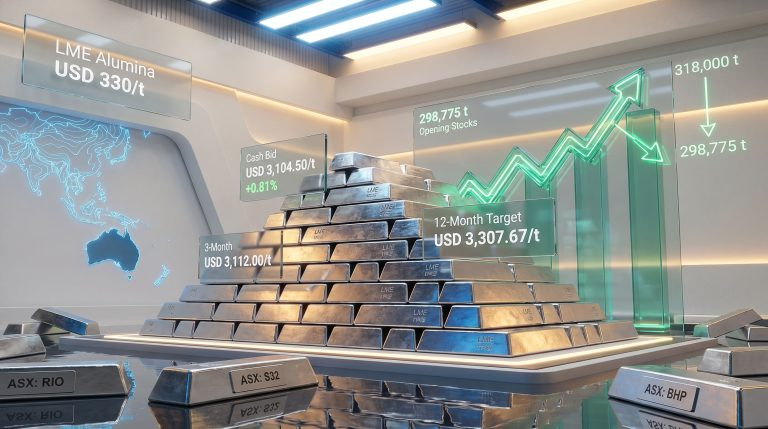
What Is the LME Aluminum Price?
The London Metal Exchange, commonly called the LME, provides widely used reference prices for aluminum and other industrial metals.
The LME states that its Official Price serves as a global reference for physical aluminum contracts and hedging transactions. Aluminum contracts are quoted in US dollars per metric ton, with a standard contract size of 25 metric tons.
For buyers, the LME price acts as the starting point for metal value. It does not represent the full delivered cost of billet, extrusion, or finished components.
The LME Official Settlement Price
The LME Official Settlement Price is based on the last cash offer price quoted during the second Ring session. It is widely used to settle futures contracts and price physical metal agreements.
Suppliers may use this price in several ways:
- The LME price on the purchase order date
- The LME price on the shipment date
- The average LME price during the previous month
- The average price during a defined quotation period
- A fixed LME level agreed for a specific order
This is why two suppliers can refer to “the LME aluminum price” while still using different numbers. The question is not only which source they use. Buyers should also ask which date, averaging period, and contract point apply.
LME Cash Price Versus Three-Month Price
The two LME prices most often discussed are the cash price and the three-month price.
The cash price reflects a contract settling or delivering two business days after the trading date. The three-month price represents metal for settlement or delivery three months from the date the price is agreed.
When Suppliers Use the Cash Price
A supplier may use the cash price when:
- Buying physical metal for near-term delivery
- Calculating a monthly material surcharge
- Pricing an order linked to current inventory
- Following a customer contract that specifies LME cash settlement
When Suppliers Use the Three-Month Price
The three-month price may be more relevant when:
- Material will be purchased for future production
- The supplier needs to reserve metal several months ahead
- A project has a long tooling or approval period
- The contract uses forward pricing or hedging
The cash and three-month prices may be close. At other times, a clear gap appears.
What Is an Aluminum Physical Premium?
The physical premium is an amount paid above the LME base price.
It reflects the cost and difficulty of obtaining physical aluminum in a specific region. Regional supply, logistics, trade policy, duties, warehouse availability, and buyer demand can all affect the premium.
CME Group lists separate aluminum premium contracts for the US Midwest, European duty-paid metal, European duty-unpaid metal, and Japan. These premiums reflect local market conditions rather than one single global physical price.
In other words, the same LME aluminum price can produce very different delivered metal costs in the US, Europe, and Asia.
US Midwest Aluminum Premium
A simplified US primary aluminum price may therefore look like:
LME aluminum price + US Midwest premium
Import duties, freight, conversion, and downstream manufacturing costs may still apply after that.
European Aluminum Premiums
Europe commonly uses both duty-paid and duty-unpaid premium references.
The duty-paid premium relates to metal for which applicable import duty has already been paid. Duty-unpaid pricing applies before that duty is included.
The difference matters when buyers compare:
- European-produced metal
- Imported metal already cleared through customs
- Metal stored under bonded conditions
- Material purchased from a trader
- Billet bought directly from a producer
Japan Premium and MJP
MJP usually refers to Main Japanese Ports and is often used as an Asian reference for imported primary aluminum premiums. The related CME contract uses the Aluminum CIF Japan Premium assessment published by Platts.
The MJP premium matters beyond Japan.
Billet suppliers, traders, extrusion plants, and downstream manufacturers across Asia may watch it when discussing raw material costs. It is not the only premium used in Asia, but it is a useful signal of regional physical market pressure.
Why Can Premiums Rise While the LME Price Falls?
This is one of the most important points in aluminum purchasing.
The LME price reflects global expectations about aluminum supply and demand. A regional premium reflects how easy—or difficult—it is to secure physical metal in a certain market.
These signals can move in different directions.
For example, traders may expect global smelter output to recover in the next few months. That expectation can push the LME price lower. At the same time, a buyer may still face:
- Limited metal in a nearby warehouse
- Higher import duties
- Port congestion
- Longer shipping routes
- Reduced availability from an approved origin
- Strong regional demand
- Tight billet supply
In that case, the LME price may fall while the physical premium remains high. This explains why a lower exchange price does not always lead to immediate savings on an extrusion or finished component.
What Is the Aluminum Billet Conversion Cost?
Industrial extrusion companies do not feed generic exchange-traded aluminum directly into an extrusion press. They normally purchase aluminum billet prepared in the correct alloy, diameter, chemistry, and condition.
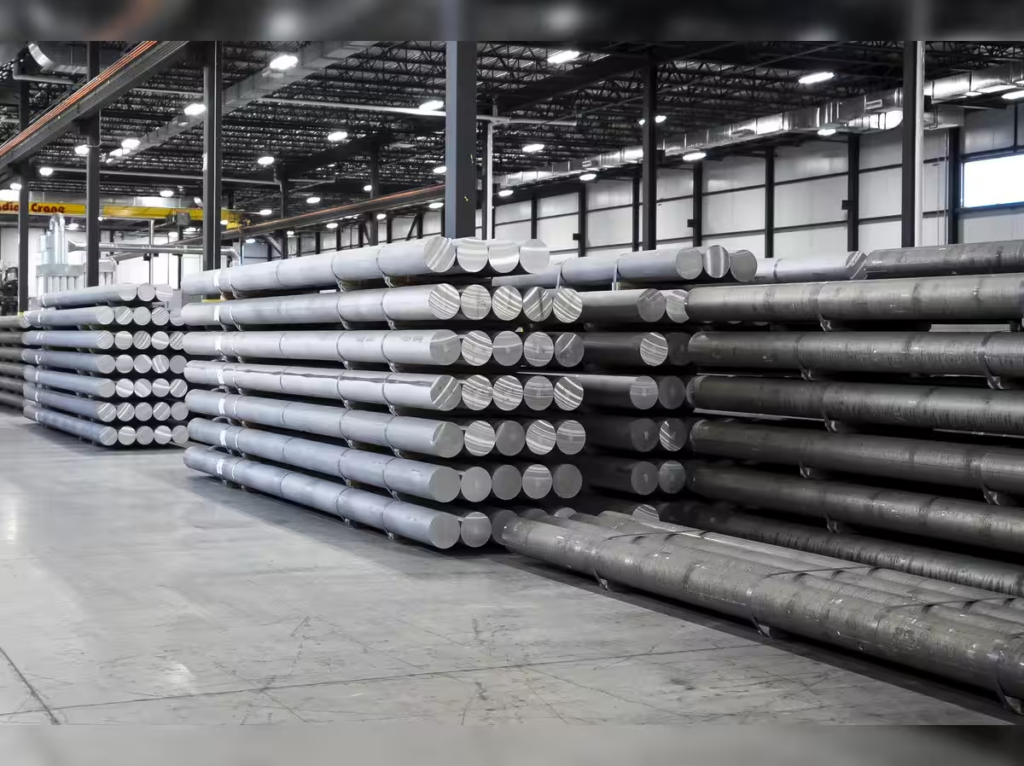
Billet conversion covers the work required to turn primary aluminum and other inputs into extrusion billet. Depending on the supplier and market, it may include:
- Alloying elements
- Casting
- Homogenization
- Billet cutting
- Scrap recovery assumptions
- Energy
- Quality control
- Producer margin
- Delivery to the extrusion plant
The billet price can therefore remain high even when the LME price falls. A supplier may have booked billet earlier at a higher metal price. It may also face a higher billet premium because of alloy availability, small order volume, or local supply limits.
Alloy Choice Also Changes the Price
Different aluminum alloys require different chemical compositions and production controls. Common 6xxx-series alloys such as 6061, 6063, and 6082 may have different billet prices even when the LME base is identical.
Alloy cost can change because of:
- Magnesium and silicon content
- Additional alloying elements
- Chemistry control
- Mechanical property requirements
- Homogenization requirements
- Demand and local availability
- Minimum purchase quantities
Selecting a higher-strength alloy without a clear engineering reason can raise both the billet cost and the processing cost.
That said, the cheapest alloy is not always the lowest-cost choice. A material that machines cleanly, extrudes with good yield, and meets the required strength may reduce cost elsewhere.
How Extrusion Costs Affect Aluminum Prices
Extrusion cost is the charge for turning billet into a profile. It may include press time, heating, handling, stretching, cutting, aging, inspection, scrap, and production overhead.
Several factors have a strong effect on the extrusion cost.
Profile Weight
A heavier profile uses more metal per meter. This directly raises the material cost. However, weight alone does not tell the full story. A light profile with thin walls and a difficult shape may be harder to extrude than a heavier, simpler section.
Profile Complexity
Thin walls, deep cavities, tight tolerances, high width-to-thickness ratios, and uneven mass distribution can make extrusion more difficult.
Extrusion Yield
Yield is the percentage of purchased billet that becomes acceptable product. Metal can be lost through:
- Billet ends
- Extrusion butts
- Saw cutting
- Setup scrap
- Profile defects
- Dimensional rejection
- Sample testing
A profile with poor yield needs more billet to produce the same quantity of saleable parts.
Heat Treatment and Mechanical Properties
Temper requirements such as T5 or T6 affect production time, energy, and process control. Parts with strict mechanical properties may also require tensile testing, hardness checks, or additional lot records.
How CNC Machining Changes the Final Part Price
For a CNC-machined aluminum part, metal may be only one piece of the cost. Its price may depend more heavily on:
- Machine cycle time
- Number of setups
- Fixture design
- Cutting tool consumption
- Tolerance requirements
- Flatness and perpendicularity
- Hole position
- Thread specifications
- Deburring
- Cleaning
- Inspection time
- Rejection risk

Here is a useful question: how much of the original material is removed during machining?
A part made from a large block may lose most of its weight as chips. In that case, the buyer is paying for the original stock, not only the finished net weight. Scrap has value, of course. Suppliers may recover and credit part of it. Still, scrap recovery does not normally match the full purchase price of certified material.
Machining Time Can Matter More Than LME
Suppose the raw metal accounts for 25% of the final part price. A 10% drop in metal cost would reduce the total price by only about 2.5% before considering old inventory, premium changes, scrap credit, and other charges. That is why asking for a 10% finished-part reduction after a 10% LME decline may not reflect the actual cost structure.
For a large, simple extrusion, the result could be different. Material may represent a much greater share of the finished price.
Surface Treatment Is a Separate Cost Layer
Surface treatment costs do not normally follow the LME price. Common treatments include:
- Anodizing
- Hard anodizing
- Powder coating
- Chemical conversion coating
- Nickel plating
- Tin plating
- Sandblasting
- Brushing
- Polishing
The price may depend on surface area, coating thickness, color, cosmetic standard, masking, rack marks, pretreatment, testing, and lot size.
Quality Control and Documentation Affect Pricing
Quality requirements have a real cost. A basic industrial extrusion may need standard dimensional inspection and a material certificate. An automotive, thermal, or safety-related part may require much more:
- First article inspection
- CMM reports
- Capability studies
- Control plans
- PPAP documents
- Material traceability
- Surface thickness testing
- Tensile or hardness testing
- Custom gauges
- Packaging validation
- Lot retention records
The inspection method should match the risk and technical need.
Requiring a full CMM report for every dimension on every shipment can raise the unit cost without adding equal value. On the other hand, reducing inspection on a critical interface may create a much larger cost later. The sensible approach is to define critical characteristics clearly and build inspection around them.
Tooling Cost and Amortization
Custom aluminum parts often require tooling before production begins. This may include:
- Extrusion dies
- CNC fixtures
- Checking gauges
- Punching dies
- Welding fixtures
- Cutting fixtures
- Assembly jigs
Some suppliers charge tooling as a separate one-time cost. Others amortize it into the unit price. Both approaches can be reasonable, but buyers should compare them carefully. A low tooling charge with a high unit price may be more expensive over a long program. A higher tooling charge may make sense when it supports faster production, better repeatability, or lower cycle time.
Before comparing quotations, confirm:
- Who owns the tooling?
- Where will it be stored?
- How many parts is it expected to produce?
- Who pays for maintenance?
- Is replacement included?
- Can the tooling be transferred?
- Is any tooling cost built into the part price?
Without these answers, two quotations may look similar while carrying very different long-term costs.

Packaging and Logistics Can Change the Landed Cost
Packaging cost may include:
- Protective film
- Interleaving
- Foam
- Plastic bags
- Export cartons
- Wooden cases
- Pallets
- Desiccants
- Moisture protection
- Custom trays
- Returnable packaging
Cosmetic parts usually need more protection than internal mechanical parts. Freight also depends on shipment size, Incoterms, port charges, inland transport, container loading, customs handling, and delivery location. This is why buyers should compare landed cost rather than the factory price alone.
A quotation that is $0.10 cheaper per part can lose its advantage after poor container use, damaged packaging, or an expensive inland delivery route.
Why Do Two Suppliers Quote Different Aluminum Prices?
Two qualified suppliers can review the same drawing and return very different prices. That does not always mean one supplier has made a mistake. They may use different assumptions for:
- LME period
- Regional premium
- Billet source
- Alloy cost
- Material yield
- Extrusion speed
- Scrap recovery
- Machine cycle time
- Tool life
- Inspection level
- Packaging
- Annual volume
- Payment terms
- Currency risk
- Capacity loading
One supplier may also include hidden allowances for risk.
For example, a vague drawing may lead the supplier to assume tighter tolerances, more inspection, or a higher rejection rate. Clear technical information can reduce those allowances.
This is one reason a detailed RFQ often receives a better price than a simple email with a drawing attached and the words “Please quote urgently.”
Aluminum Pricing Considerations for US Buyers
US buyers should review more than the LME price. Regional premiums, tariffs, customs classification, product origin, freight, and domestic transport can materially change the landed cost.
The US Midwest premium reflects North American market conditions, including availability, transport, and trade policy. It is added to the base metal price when calculating many US physical aluminum transactions. For finished components, buyers should also confirm:
- HTS classification
- Aluminum content
- Country of origin
- Applicable trade measures
- Treatment of tooling
- Inland freight from the US port
- Broker and customs fees
Trade rules can change, so the applicable duty should be checked for the exact product and shipment date.
Aluminum Pricing Considerations for EU Buyers
European buyers also need to consider regional premiums, customs duties, transport, origin, and carbon-related requirements.
The EU Carbon Border Adjustment Mechanism entered its definitive regime on January 1, 2026. Aluminum is one of the sectors covered by the system. The mechanism includes importer authorization, reporting, and CBAM certificate obligations linked to the embedded emissions of imported goods.
CBAM does not replace the LME price or the physical premium. It adds another possible cost and compliance layer. For EU aluminum sourcing, buyers may need information about:
- Product classification
- Country of origin
- Production route
- Embedded emissions
- Verified emissions data
- Carbon price paid in the origin country
- Importer CBAM responsibilities
The price of CBAM certificates is linked to EU Emissions Trading System allowance auction prices, according to the European Commission. Because of this, carbon data is becoming part of commercial supplier evaluation, not just an environmental report stored somewhere and forgotten.
Sourcing Aluminum Components From Vietnam
Vietnam can provide US and European buyers with another manufacturing base outside China. Still, sourcing from Vietnam does not remove exposure to the global aluminum market.
Vietnamese manufacturers also purchase billet, alloying materials, tooling, surface treatment chemicals, packaging, and production equipment through regional or international supply chains. The real advantage should be assessed through total value, including:
- Manufacturing cost
- Engineering support
- Supplier responsiveness
- Production flexibility
- Quality management
- Supply chain diversification
- Trade access
- Logistics
- Cost transparency
Buyers should also check how much work the supplier performs directly. A quotation becomes harder to control when extrusion, machining, finishing, inspection, and assembly pass through several unrelated subcontractors.
KIMSEN Industrial Corporation operates from Bac Ninh, Vietnam, and provides aluminum extrusion, CNC machining, stamping, welding, surface treatment, and assembly for thermal, automotive, machinery, and solar applications. The company reports two extrusion lines rated at 1,100 UST and 1,880 UST, with production capacity of approximately 800 tons per month.
For international buyers, a broader manufacturing scope can make cost discussions clearer. Material, machining, finishing, inspection, and packaging can be reviewed within one program rather than split across several suppliers.
Read more: Aluminum Extrusion Suppliers in Vietnam for 2026 – KIMSEN Industrial Corporation
Read more: Aluminum Manufacturer in Vietnam Amid US Tariff Shifts – KIMSEN Industrial Corporation
Final Thoughts
An aluminum price is not one number. It is a stack of costs.
The LME price provides the base metal reference. Regional premiums reflect local physical market conditions. Billet conversion adds alloy preparation and casting costs. Extrusion, CNC machining, surface treatment, quality control, packaging, and logistics turn the metal into a usable industrial component.
That is why a 10% movement in the LME price does not always create a 10% change in the final part price.
For buyers, the goal should not be to predict every market movement. It should be to understand the pricing structure well enough to ask better questions. Which LME reference is being used? What premium applies? How is yield calculated? Which costs are fixed? Which costs can change? What assumptions sit behind the quotation?
Once those answers are clear, supplier comparisons become much easier. And honestly, that is where good purchasing starts—not with the lowest number in a spreadsheet, but with a price that still makes sense after someone asks how it was calculated.