Aluminum prices have dropped from their June 2026 peak. Yet many buyers are opening new quotations and seeing little relief. Some are even paying more.
It sounds contradictory, doesn’t it? The London Metal Exchange price falls, so the cost of aluminum products should fall too. That’s the simple version. Real purchasing, however, has several more layers.
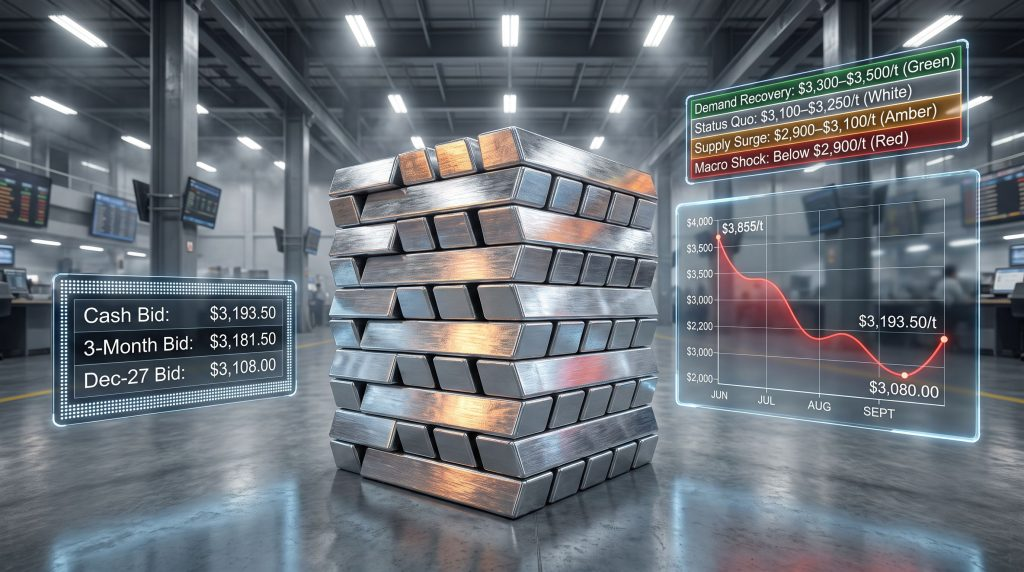
By late July 2026, three-month LME aluminum was trading around $3,170 per metric ton. That was about 16% below the four-year high of $3,787.50 reached in early June. On the screen, much of the geopolitical “war premium” appeared to have disappeared.
The physical market tells another story.
Regional premiums remain elevated. Available stocks are still tight. Some Middle Eastern production has not fully recovered. Tariffs, freight, billet conversion, machining, finishing, and inventory replacement costs continue to work their way into supplier quotations.
The main takeaway is quite simple: the LME price may have fallen, but the total cost of buying and processing aluminum has not fallen at the same speed.
Aluminum Prices Have Fallen From Their June Peak
The aluminum market moved fast during the first half of 2026.
Supply disruptions in the Middle East pushed LME aluminum to $3,787.50 per metric ton in early June, its highest level in four years. By July 24, it had returned to roughly $3,170 per metric ton—close to where it traded before the latest conflict-related supply shock.
Several developments helped calm the futures market.
Emirates Global Aluminium began restarting operations at its Al Taweelah facilities. New Indonesian production entered the export market. Chinese semi-finished aluminum exports also increased, helping offset some of the supply pressure created by lower Gulf output.
From a distance, the market may look more comfortable.
But here’s the thing: futures prices often react to what traders believe will happen next. Industrial buyers pay for what is actually available now, in the right alloy, origin, shape, location, and delivery window.
Those are not always the same thing.
LME Is Only One Part of the Aluminum Cost
The LME price is an important reference for primary aluminum. Still, it is not the final price paid by a manufacturer—or by an OEM buying finished aluminum components.
A simplified aluminum cost structure may include:
- LME metal price;
- regional physical premium;
- alloying and billet conversion;
- extrusion or casting cost;
- cutting and CNC machining;
- surface treatment;
- inspection and testing;
- packaging and freight;
- tariffs and carbon-related charges.
Imagine buying a plane ticket. The base fare may look lower, but luggage, taxes, seat selection, and airport fees can keep the final amount high. Aluminum purchasing works in a similar way—just with more engineering drawings and fewer holidays.
Physical Aluminum Premiums Remain High
The clearest explanation for the current price gap is the physical premium.
A physical premium is the amount buyers pay above the LME price to receive metal in a particular region. It reflects factors such as availability, freight, duties, handling, approved origin, and delivery risk.
The LME may say that aluminum is becoming cheaper. The premium may say that securing the right metal is still difficult.
Japan’s Q3 Premium Rose to $395 per Metric Ton
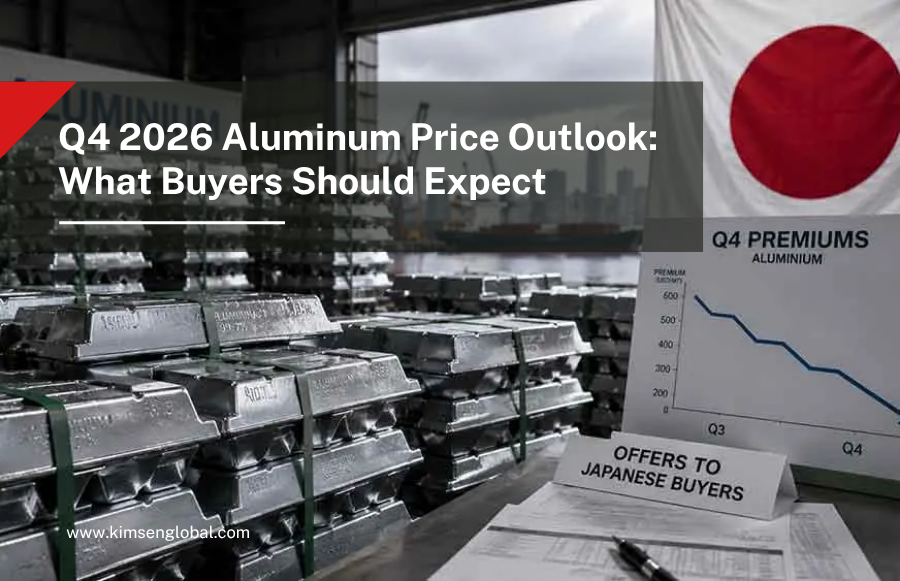
On July 6, the Q3 2026 premium for primary aluminum delivered to main Japanese ports settled at $395 per metric ton above the LME cash price.
That was 11.9%–12.9% higher than the Q2 range of $350–353 per metric ton. It was also the highest Q3 level recorded in more than a decade.
The final settlement was lower than initial offers of $440–480 per metric ton. Buyers resisted prices above $400 as expectations for Middle Eastern supply improved.
Still, $395 is hardly a low number.
The settlement shows that buyers were less worried than they had been in May, but they were not fully confident that normal supply would return during the quarter.
European Premiums Have Eased, But Remain Elevated
The duty-unpaid Rotterdam premium was assessed at $525–560 per metric ton on July 3. That was down from $600–625 in mid-May, but remained far above levels seen before the Middle East disruption.
Earlier in the crisis, European extrusion billet premiums had climbed sharply. Reuters reported that the Rotterdam billet premium more than doubled from $530 to $1,100 per metric ton by late April. Primary aluminum premiums also increased as buyers competed for limited supply.
The situation has improved since then, but it has not returned to normal.
For European extrusion buyers, this matters because billet availability can have a more direct impact on quotations than the headline LME movement.
US Buyers Face a Different Cost Problem
The United States has an additional pressure point: tariffs.
The US Midwest aluminum premium was assessed at 108.7 cents per pound on July 3. It had fallen from 119.05 cents per pound in May, but remained a major addition to the underlying metal price.
US buyers are not only paying for metal availability. The regional premium also reflects the country’s import duties and tight domestic supply.
Earlier in 2026, Reuters reported that the combined LME price and US physical premium had pushed the all-in cost of primary aluminum above $5,000 per metric ton.
Therefore, a lower LME price may provide some relief, but it doesn’t remove the tariff-related cost built into the US market.
Supply Recovery Is Slower Than Market Sentiment
Why do physical premiums remain high when LME aluminum has fallen?
One reason is that restarting a smelter is not like turning on a light switch.
Gulf Production Has Not Fully Recovered
Middle Eastern aluminum production fell by 20% during the first half of 2026, according to data cited by Reuters. Smelter operating rates dropped by more than two million metric tons on an annualized basis after facilities and shipping routes were disrupted.
Emirates Global Aluminium has made progress in restoring production. However, Aluminium Bahrain’s recovery remained unclear in late July, while Qatar Aluminium was reportedly operating at around 60% capacity.
Even when production restarts, several questions remain:
Can the metal leave the region without delay? Are normal shipping routes available? Will insurers accept the route? Can the producer supply the alloy and delivery schedule required by each customer?
The futures market can price in a recovery months ahead. A purchasing manager placing an order for August delivery cannot.
Exchange Inventories Are Still Tight
On July 10, LME aluminum inventories were at their lowest level since September 2022.
The LME cash contract was also trading at a small premium to the three-month contract. This market structure, known as backwardation, can indicate tighter near-term availability.
Exchange inventories do not represent every ton of aluminum available worldwide. They are still a useful signal.
When visible stocks are low, buyers have less room to absorb another supply interruption. Suppliers may also become more cautious about long quotation validity periods or large unforecast orders.
China and Indonesia Are Easing Pressure—But Not Everywhere
Additional output from China and Indonesia has helped calm the aluminum market.
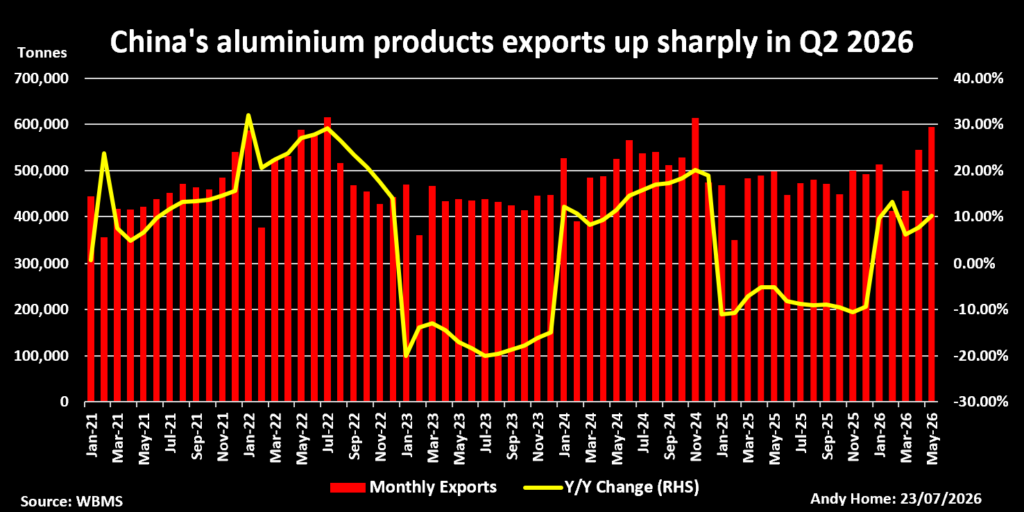
Chinese exports of semi-finished aluminum products increased by 10% year on year during the first five months of 2026. May exports reached 595,000 metric tons, the highest monthly level since November 2024.
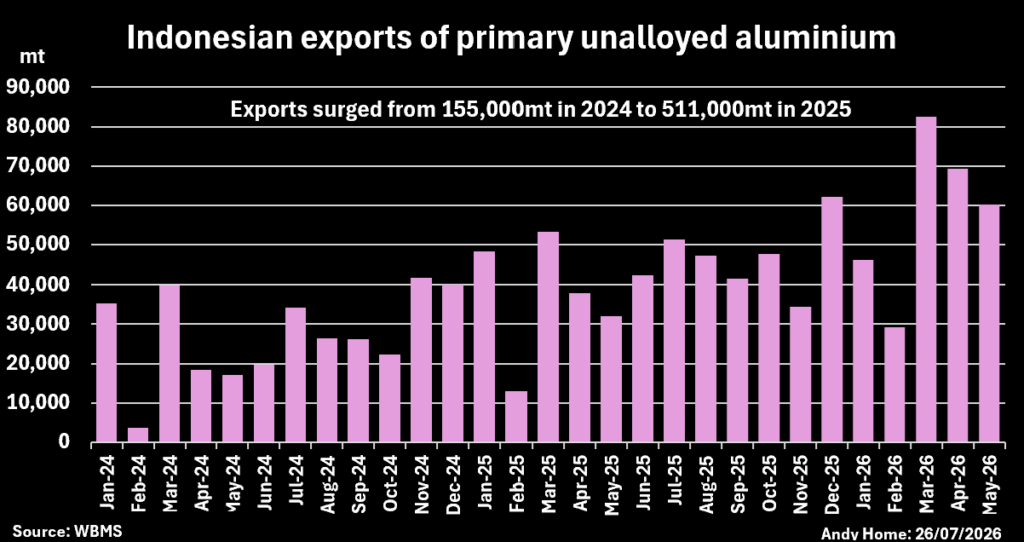
Indonesia is also becoming a larger primary aluminum supplier. Its exports rose from 155,000 metric tons in 2024 to 511,000 metric tons in 2025, followed by another 58% year-on-year increase during the first five months of 2026.
That additional metal matters. It helps fill part of the gap left by Gulf producers. However, it is not a perfect replacement.
Chinese bars, rods, tubes, and other semi-finished products cannot always replace the primary metal or specific alloys previously supplied by Middle Eastern producers. Indonesian metal may also carry different freight, carbon, origin, or customer-approval considerations.
Supply can look balanced globally while remaining tight in one region or for one specification. That small distinction makes a big commercial difference.
Suppliers May Still Be Using Higher-Cost Inventory
There is also a timing issue. An aluminum extrusion company may have purchased billet when the LME price and regional premium were higher. That material may remain in its warehouse for several weeks before entering production.
When the LME price falls today, the supplier’s existing stock does not suddenly become cheaper.
Extrusion and CNC Parts Do Not React in the Same Way
Another common mistake is assuming that every aluminum component should move by the same percentage as the LME price. That rarely happens.
Material-Intensive Extrusions
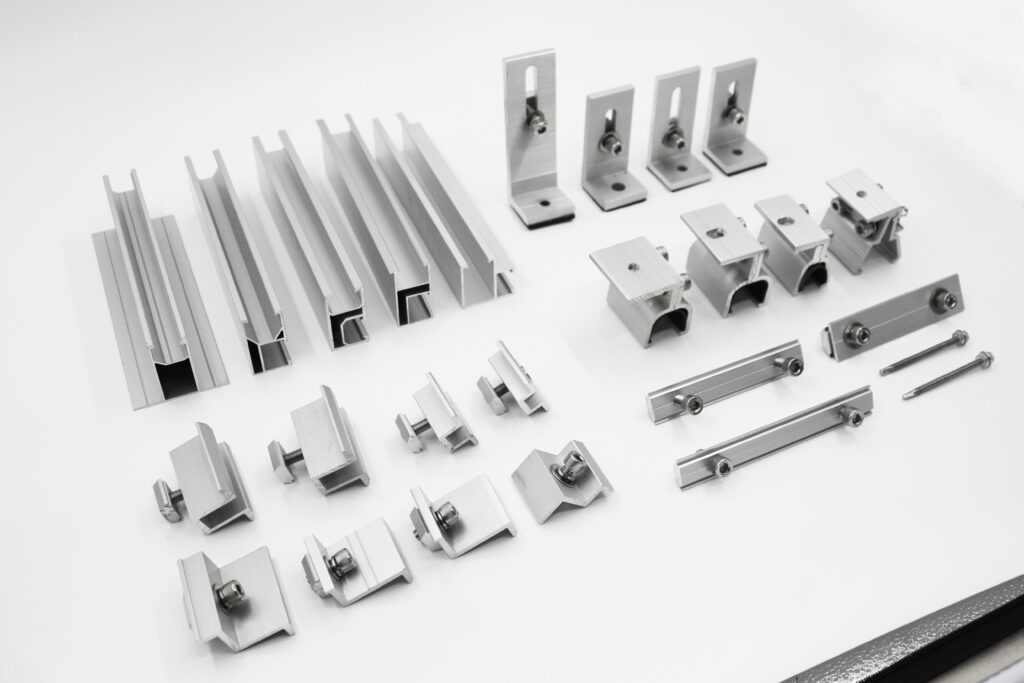
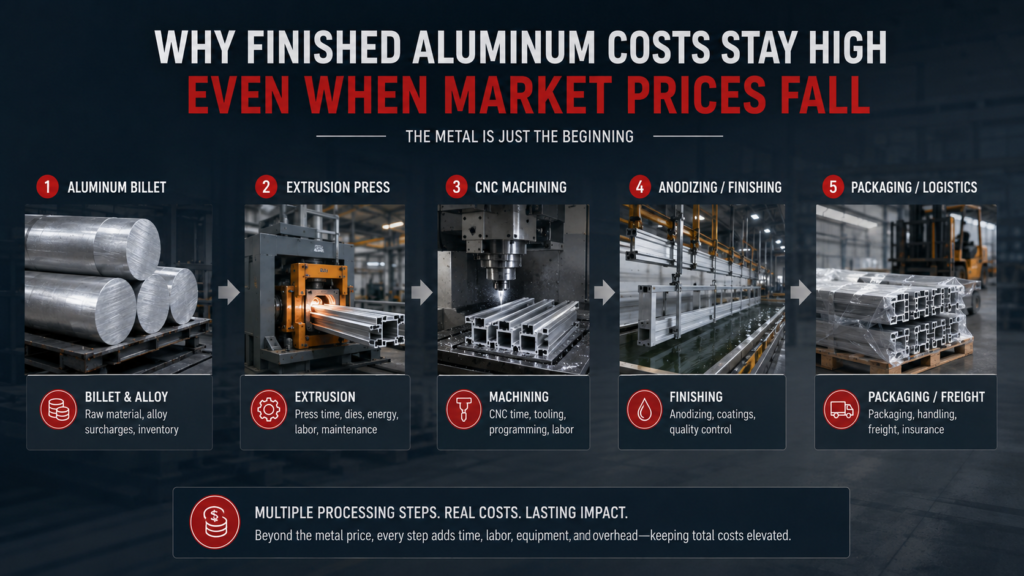
For a large, relatively simple extruded profile, metal can represent a major share of the total cost. A change in LME, billet premium, or scrap value may therefore have a visible effect on the final price.
A heavy profile with a low extrusion yield may remain expensive even when LME aluminum falls.
CNC-Machined Aluminum Components
For a precision CNC-machined part, processing may represent a larger share of the total cost.
Material is important, of course. Yet machining time, tool wear, tolerances, inspection, fixtures, deburring, surface treatment, and rejection risk may outweigh a moderate movement in metal prices.
What Should Aluminum Buyers Ask Their Suppliers?
When reviewing a new quotation, consider asking:
- Which LME period is used for the material price?
- Which regional premium is included?
- Is the quotation based on current stock or future replacement material?
- How long is the price valid?
- Which cost elements may be adjusted before mass production?
- How much of the part cost comes from material and how much from processing?
- Can repeat-order pricing use an agreed LME adjustment formula?
- Does the supplier require a volume forecast to reserve billet?
These questions do more than support negotiation. They help both sides avoid surprises.
For long-running programs, a clearly defined material adjustment method may be more useful than repeatedly renegotiating the full unit price. Buyers can see which portion changes with the market, while the supplier can separate raw material movement from manufacturing costs.
Aluminum Price Outlook for the Rest of Q3 2026
The fall in LME aluminum prices suggests that the market expects replacement supply from Indonesia, China, and recovering Gulf producers to reduce the global shortage.
Still, physical premiums tell us that the supply chain remains cautious.
Several factors should be watched through August and September:
- the speed of production recovery in the Gulf;
- shipping access through the Strait of Hormuz and Red Sea;
- LME and regional warehouse inventories;
- Chinese semi-finished aluminum exports;
- new Indonesian smelter output;
- US tariff policy;
- European CBAM-related buying and stock replenishment.
If Gulf production continues to recover and alternative supply remains available, physical premiums may soften further. However, another production or shipping disruption could quickly reverse the recent calm.
For buyers, the sensible response is not panic buying. Nor is it waiting endlessly for the lowest possible LME point.
Better planning usually starts with confirmed specifications, realistic forecasts, clear pricing formulas, and open discussions with suppliers.
Final Thoughts
Aluminum prices have fallen from their June 2026 high. But that does not mean the aluminum supply chain has returned to normal.
LME aluminum dropped by about 16% from its early-June peak to late July. At the same time, Japan’s Q3 premium rose to $395 per metric ton, European physical premiums remained elevated, and US buyers continued to face substantial tariff-related costs.
That is the answer to the apparent contradiction.
The price of aluminum on an exchange is falling. The cost of securing, moving, processing, and delivering the right aluminum is still catching up.
For US and EU companies buying aluminum extrusion or CNC-machined components, the most useful question may no longer be, “Has the LME price fallen?”
A better question is: “Which parts of our supplier’s cost have actually changed?”
That conversation is less dramatic than watching a price chart. Honestly, it is also far more useful.
Source: Aluminium falls on EGA alumina restart, still set for weekly rise | Reuters
War? What war? Aluminium’s Gulf disruption premium vanishes | Reuters