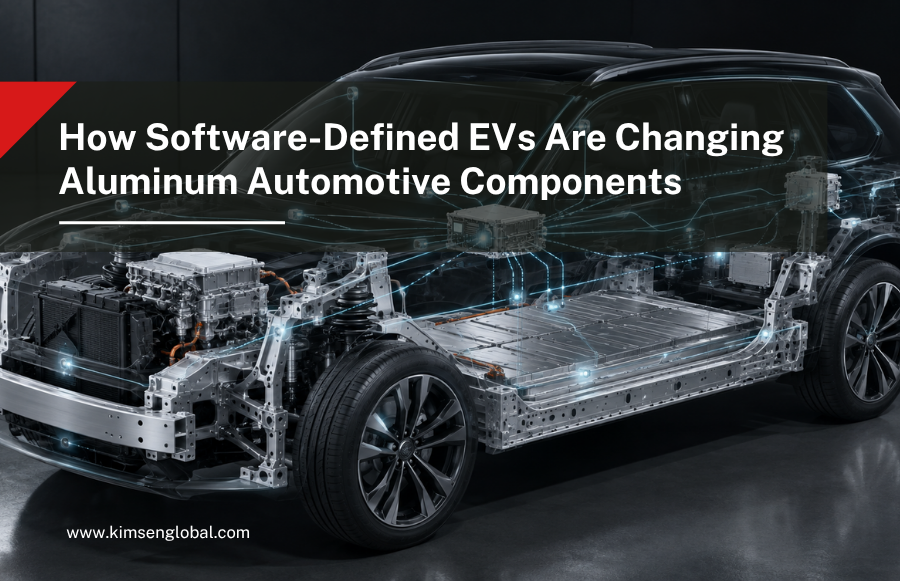
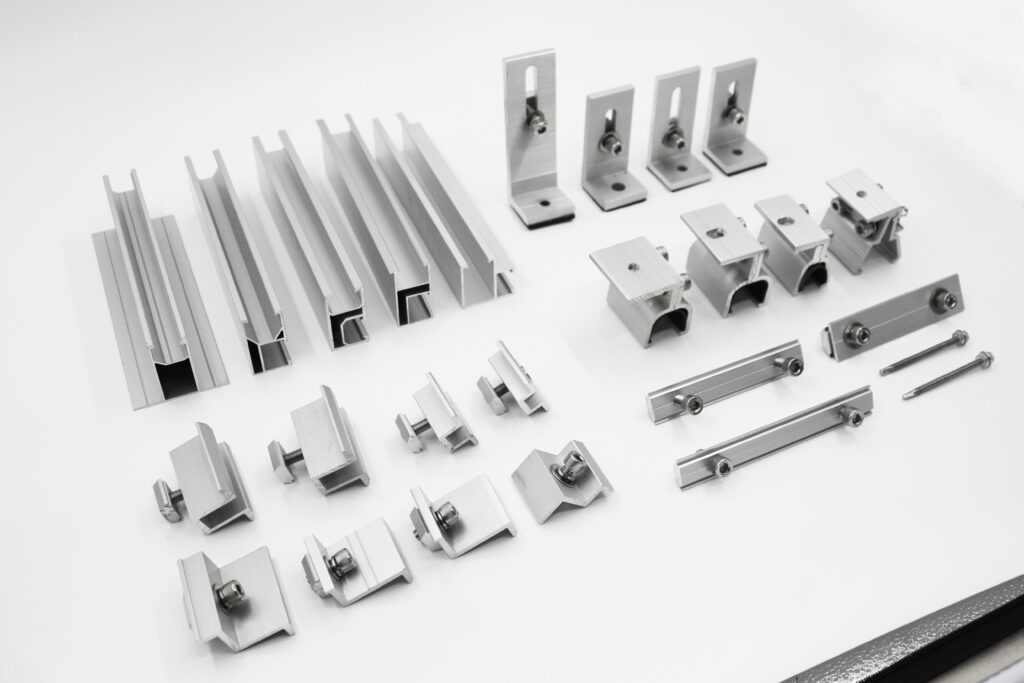
The shift toward software-defined and highly electrified vehicles is changing more than vehicle software. It is also changing the physical parts around batteries, power electronics, sensors and vehicle structures. For aluminum automotive components, this means more thermal demands, greater functional integration, tighter interfaces and a manufacturing process that often continues well beyond extrusion.
A modern vehicle can have more computing power, more sensors and more software-controlled functions than engineers would have imagined a generation ago.
But here’s the thing: software still needs hardware.
Computers generate heat. Batteries add weight. Sensors need stable mounting positions. Inverters need protection and cooling. Structural parts must carry loads while fitting around increasingly dense electrical systems.
This is where the development of software-defined vehicles starts to change the seemingly traditional world of aluminum automotive components.
And the change is already visible.
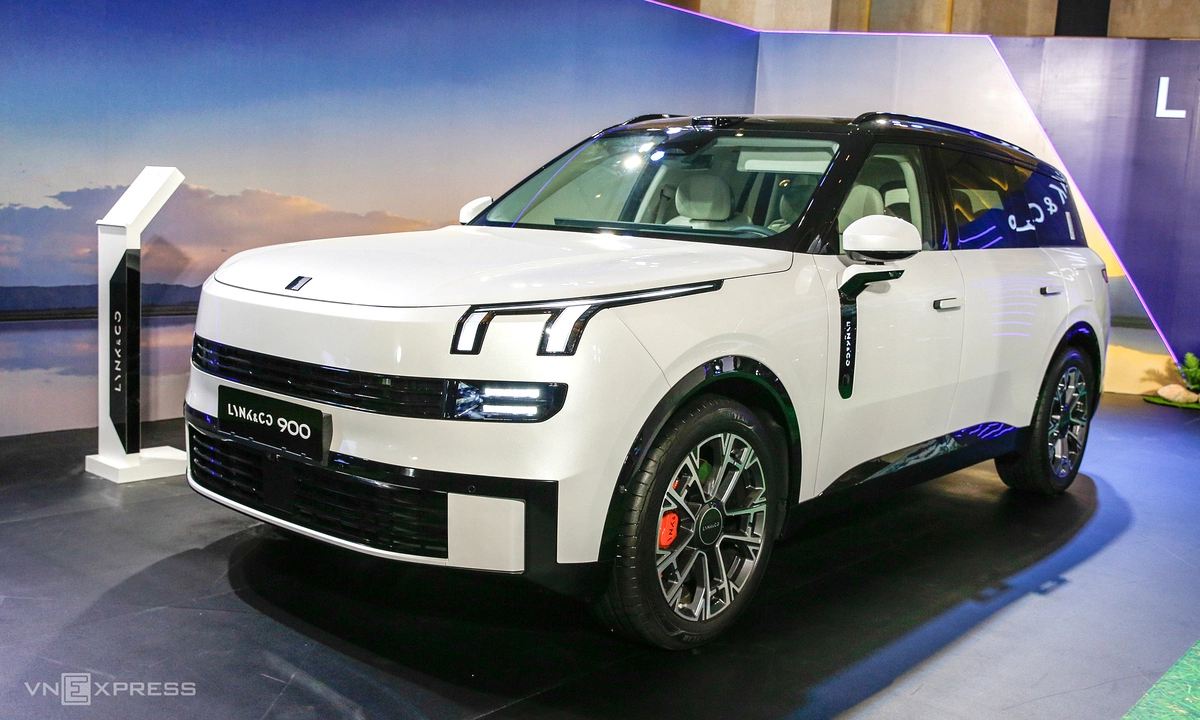
Lynk & Co 900 Shows Where Vehicle Architecture Is Heading
A useful example comes from the Lynk & Co 900. The 900 is not a battery-electric vehicle; it is a large electrified hybrid SUV. Yet its architecture gives a clear view of where modern vehicle engineering is heading.
According to Lynk & Co, the vehicle is based on its SPA Evo platform and uses the LKEEA2 central integrated electrical and electronic architecture. The manufacturer also describes a digital chassis in which driving intelligence can work with chassis control, including road preview and suspension response.
That matters.
Traditionally, engineers could think of suspension, braking, powertrain, infotainment and driver assistance as relatively separate systems. Modern vehicle architectures are making those boundaries less clear.
A sensor may provide information that affects another vehicle domain. A central computer may coordinate functions that once had separate control units. Software updates can also change vehicle functions after production — a development significant enough to have its own UNECE vehicle regulation, UN Regulation No. 156, covering software updates and software update management systems.
The car is becoming a connected system. And when the system changes, the components around it change too.
More Computing Power Creates a Very Physical Problem: Heat
Software may be invisible. Heat isn’t.
Advanced driver assistance, digital cockpits, connectivity and vehicle control require substantial computing resources. NVIDIA, for example, rates its DRIVE AGX Orin automotive platform at up to 254 TOPS of AI performance and describes it as supporting applications from Level 2+ driving assistance toward fully autonomous driving.
Qualcomm is following the same broader direction with automotive computing platforms developed for digital cockpits, ADAS and software-defined vehicle functions.
All that electronics creates another engineering question:
Where does the heat go?
This makes thermal management increasingly relevant to automotive hardware. For aluminum manufacturers, this changes the conversation. The job may begin with an extrusion, but the customer often needs a finished component rather than a length of profile.
Extrusion may therefore be followed by CNC milling, drilling, tapping, surface treatment, inspection or assembly. In other words, software growth can indirectly create more demanding work for the metal parts surrounding the electronics.
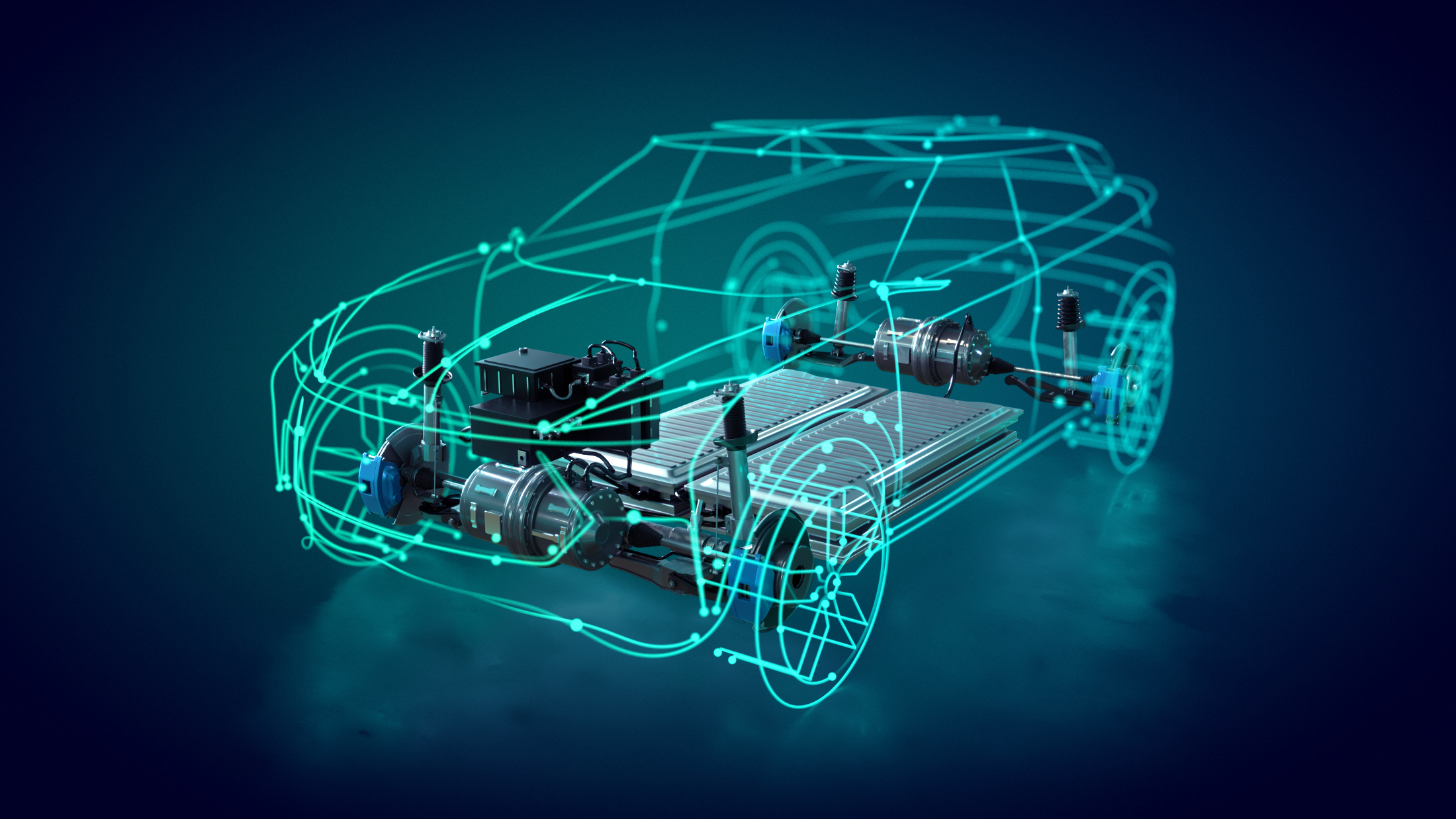
Bigger Batteries Make Lightweighting Matter Again
Electrification creates a small contradiction.
Vehicles need more batteries to provide useful range and power. Yet those batteries add significant mass. Manufacturers then have another reason to remove unnecessary weight elsewhere. That is one reason aluminum remains important.
The International Energy Agency reported that global electric car sales exceeded 20 million units in 2025 and represented about 25% of total car sales. For 2026, the IEA expects sales to reach around 23 million vehicles, or roughly 28% of the market.
The Aluminum Association identifies battery housings, e-motors and drives among the areas expected to contribute to automotive aluminum growth. It projects average aluminum content in North American light vehicles to reach around 556 pounds per vehicle by 2030.
This doesn’t mean aluminum replaces steel everywhere. Automotive engineering is increasingly a multi-material problem.
What it does mean is that designers have more reasons to consider aluminum where weight, corrosion resistance, manufacturability and structural performance make sense together.
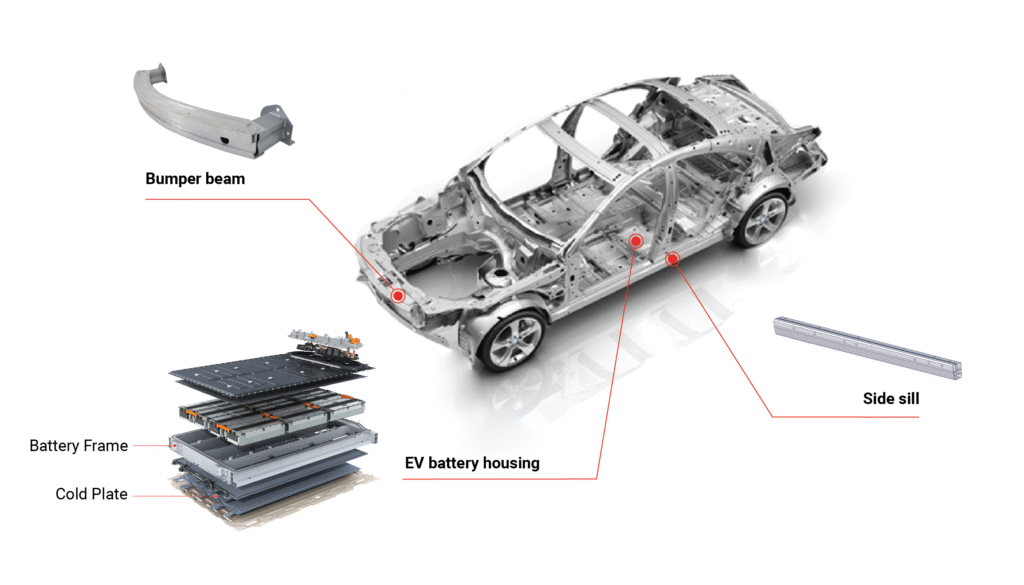
For extruded aluminum, potential applications can include:
Battery frames and structural members
Bumper beams and crash-related structures
Electronic housings and supports
The interesting shift is that lightweighting is no longer only about fuel consumption. In an EV, reducing mass can also support vehicle range, payload and overall system efficiency. The Aluminum Association similarly identifies weight reduction as one reason automakers use aluminum to offset the mass associated with EV batteries.
Aluminum Parts Are Becoming More Functionally Integrated
Consider an extruded structural component. Twenty years ago, the drawing might have focused mainly on its cross-section, length, mechanical properties and a few holes. A modern component could combine several requirements:
structural load → mounting interface → heat transfer → cable clearance → sealing surface → CNC features → assembly points
That changes how engineers should approach manufacturing.
An extrusion profile that looks efficient on CAD may become expensive if critical features are difficult to machine. A wall placed a few millimeters differently might simplify CNC access. A mounting face may require additional stock because it must be machined after extrusion.
The Aluminum Association’s automotive technology roadmap describes a similar trend. One example involves integrating an aluminum battery box more deeply into the vehicle structure, potentially allowing the battery cover to take over functions previously handled by separate floor components.
One component. More jobs. That is very much the direction modern automotive engineering is taking.
Precision Manufacturing Becomes Part of System Performance
When several systems share the same physical space, dimensional errors become harder to isolate. Imagine an electronic module mounted to an aluminum housing.
The mounting holes may need to match the PCB or power module. A machined base may form part of the thermal path. Another surface may interface with a gasket. The finished assembly then has to fit into the vehicle.
This is one reason automotive buyers increasingly need to evaluate the complete manufacturing route rather than only asking whether a supplier can extrude a profile.
Software Changes Quickly. Automotive Hardware Still Has to Be Built Reliably.
UNECE now has separate regulations addressing vehicle cybersecurity and software update management, illustrating how important the software layer has become to modern vehicle regulation.
Yet the physical layer still has to perform throughout the vehicle’s intended operating life. That makes manufacturing discipline rather unglamorous — and extremely important.
For automotive aluminum components, buyers may need to consider:
| Traditional sourcing question | More relevant question for integrated EV parts |
|---|---|
| Can you extrude this profile? | Can you manufacture the finished component? |
| What is your extrusion tolerance? | Which dimensions are critical after all processes? |
| What alloy do you offer? | Which alloy and temper fit the mechanical and production requirements? |
| Can you machine it? | Can extrusion and machining be planned together? |
| What is the piece price? | What is the total manufacturing route and risk? |
| Can you make the sample? | Can the process remain controlled during mass production? |
Sourcing is moving from buying a manufacturing process toward buying a controlled component.
What This Means for Automotive Aluminum Suppliers
The question from automotive buyers is gradually changing from:
“Can you make this aluminum profile?”
to:
“Can you manage the manufacturing process required to turn this design into a production-ready component?”
That’s a much bigger question.
Where KIMSEN Fits Into This Manufacturing Shift
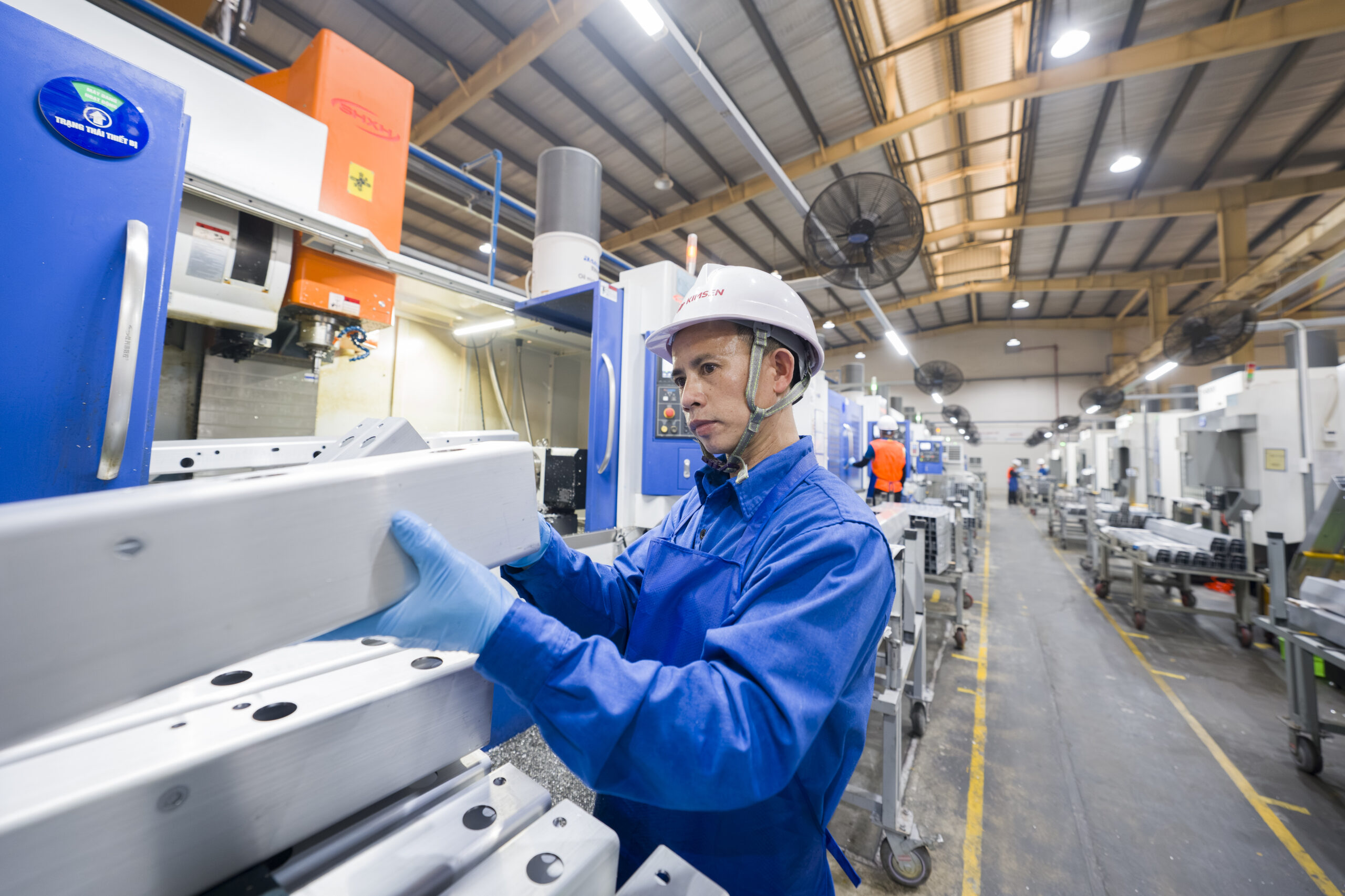
For automotive and EV projects, KIMSEN Industrial Corporation focuses on industrial aluminum components rather than simple commodity profiles. KIMSEN’s current manufacturing capabilities include aluminum extrusion, CNC machining, stamping, welding and mechanical assembly at its production facility in Bac Ninh, Vietnam. The company operates under ISO 9001:2015, ISO 14001:2015 and IATF 16949:2016 management systems.
Quality Control & Certifications | KIMSEN
This manufacturing combination is relevant when a component needs several processes after extrusion. Depending on customer drawings and technical requirements, suitable project categories can include structural aluminum components, machined housings, thermal components and other fabricated aluminum assemblies.
The important point isn’t simply having several machines in one factory. It is understanding the relationship between the processes.
For US and European engineering and sourcing teams, that can make technical discussions clearer: instead of separating extrusion, machining and fabrication into isolated purchasing packages, the manufacturing route can be reviewed around the finished component. As vehicles become more integrated, that way of thinking becomes increasingly useful.
The Vehicle Is Changing — So the Supply Chain Has to Change With It
One of the most interesting lessons from vehicles such as the Lynk & Co 900 is not a horsepower figure, screen size or sensor count. It is the architecture behind them.
The mechanical, electrical and software layers of a vehicle are becoming more connected. Lynk & Co itself describes its SPA Evo architecture as integrating intelligent driving functions with chassis control, while its LKEEA2 architecture provides a more centralized digital foundation.
The same idea can be carried downstream into manufacturing. A battery frame isn’t merely an extrusion. An inverter housing isn’t merely a box. A heatsink isn’t merely a collection of fins. These components sit inside larger systems, and their mechanical, thermal and assembly requirements increasingly overlap.
Software may be changing the car. Quietly, it is changing the metal parts underneath it too.
FAQs
What are aluminum automotive components used for in EVs?
Aluminum can be used in battery housings, structural members, e-drive components, thermal parts, body structures and other vehicle applications. The appropriate material and manufacturing process depend on structural, thermal, dimensional and cost requirements. The Aluminum Association identifies battery housings, e-motors and drives as important areas for future automotive aluminum growth.
Why is aluminum important for electric vehicles?
Battery systems add considerable mass to electric vehicles, making weight management an important engineering consideration. Aluminum offers relatively low density together with useful mechanical, corrosion and manufacturing characteristics, which is why it is considered for many EV structures and components.
How are software-defined vehicles changing mechanical components?
Software-defined architectures bring more computing, sensors, electronics and cross-domain control into the vehicle. This can indirectly increase requirements for thermal management, electronics protection, mounting accuracy and integrated structural components.
What should buyers look for in an automotive aluminum supplier?
Beyond extrusion capability, buyers should review machining, joining, inspection, traceability, quality-management systems and the supplier’s ability to understand the complete manufacturing route. For automotive projects, IATF 16949 certification is also an important supplier qualification criterion.
Editorial Note: This article was inspired in part by a technical commentary by Mr. Dam Hoang Phuc on the Lynk & Co 900 Hoang Phuc Dam – 🚘Lynk & Co 900: Chiếc xe khiến tôi muốn sửa lại… | Facebook and the changing architecture of modern vehicles. KIMSEN expanded the discussion independently to examine how software-defined and electrified vehicle design may affect aluminum automotive components and manufacturing. Technical information has also been cross-checked against publicly available materials from Lynk & Co, Geely, IEA, UNECE, NVIDIA and The Aluminum Association.